But God, who is rich in mercy, because of his great love that he had for us, made us alive with Christ even though we were dead in trespasses. You are saved by grace! He also raised us up with him and seated us with him in the heavens in Christ Jesus, so that in the coming ages he might display the immeasurable riches of his grace through his kindness to us in Christ Jesus.
Ephesians 2:4-7
I’d like to share something with you I heard this morning:
“Grace simply means that God moves toward us in love.”
It’s beautiful in its simplicity, isn’t it? Grace isn’t something we “catch” if we happen to be in the right place at the right time. Grace is God moving toward us — focused on us — His hands and heart brimming with love.
I will never forget a pastor’s conference I attended years ago where I was enthralled by one of the speakers — Joe Stowell, former president of Moody Bible College. As I waited in line to greet him and tell him what his sermon had meant to me that morning, people kept pressing in around me and standing over me. I was invisible, certain he couldn’t see me through the crowd. But then he bypassed everyone, came straight to my wheelchair, and went down on one knee to look me directly in the eye. He introduced himself and asked me about myself — and everything in his face and manner told me he meant it. He was entirely present. As far as either of us knew, there was nobody else in the room.
This is how God’s grace operates. He is always the initiator, finding us where we are, and He lowers himself so as to be reachable. Just as Jesus crossed the distance between Himself and a man who had been paralyzed for 38 years (John 5:5) — once God gets us in His sight, we can’t escape. We are His. And we want to be His.
Paul tells us in Ephesians 2 even though we were spiritually dead God already loved us. Against all odds, with everything stacked against us, God moved in and let us know we were His kind of people. He didn’t decide to love us only after we said yes to Jesus; He had already been moving toward us, setting His sights on us long before we turned toward Him. So how can we think that on our worst days — when we don’t feel our best, when we’ve blown it badly — God has stopped loving us? Impossible. Even at our most broken, on our darkest day, God was already moving in our direction, getting down on one knee, looking us straight in the eye, giving us His full attention — choosing us, singling us out, setting His affection upon us. His mercies never end; they are new every morning! (Lam 3:22, 23)
He sees us even when we feel invisible to Him.
Hagar knew a little something about invisibility and zero agency. Forced to run away, Abram and Sarai’s handmaid-turned-concubine escaped to the wilderness, driven there by Sarai’s jealousy and abuse (Gen 16:6). Alone and desperate, the Angel of the Lord (the pre-incarnate Lord Jesus) found Hagar in that desolate place and ministered His loving grace to her. Overwhelmed by the Almighty seeing her, Hagar gave the Lord a name no one had ever called Him before: El-roi. The God who sees (Gen. 16:13).
Hey y’all, I want to share some thoughts with you I’ve been mulling over about the naming of John the Baptist in Luke 1…and what that means for us, the grace-endowed people of God.
When Zechariah and Elizabeth presented their miracle baby for circumcision, Elizabeth insisted her baby be named John. Insisted. Others thought Zechariah would be more appropriate, but Elizabeth stood her ground.
“No,” she said staunchly. “His name will be John. Period. End of discussion.”
We know why she was so adamant from a verse earlier in the chapter:
But the angel said to him, “Do not be afraid, Zechariah, for your prayer has been heard, and your wife Elizabeth will bear you a son, and you shall call his name John.”
Luke 1:13
I mean, the angel Gabriel said so, come on. Who’s going to defy God’s main messenger angel? John it was prophesied, and John it shall be.
When Elizabeth told those closest to her about the naming, they balked. When has there been a ‘John’ in our history? Give him the name of a notable priest or prophet! This is a miracle! It deserves a BIG name! But John?!
“John” means ‘Yah (the LORD) is gracious’ in Hebrew. “God has graced us” is a beautiful rendering also. Zechariah and Elizabeth were graced with a son in their olden years.
Remember, Elizabeth and Zechariah were well past childbearing years. The name infers “special grace“ for a privileged couple. All of John’s days he would have the reminder of his name to know that he was a grace-gift.
May I just insert here – [it is my thesis after all!] – you and I have been blessed to carry the name of Christ Jesus. This should remind us all day, every day that we are stewards of special grace and are to extend that same grace everywhere we go.]
They could have gotten really clever and named their baby Zechariah John. That’s catchy, right? Got a nice ring to it? It’s good compromise after all. But no. His name was John. No other name would do.
So from here on are the thoughts I’ve been mulling over about this scene in the third gospel, Luke 1:59-80 in particular.
The Baptist was born into the world to do one thing: prepare people’s hearts for the Advent of Messiah (Luke 1:17). His coming illustrates the Church’s mission since her birth in the Acts.
We believers should take joy in being part of something so special, birthed by God, indwelt by His Holy Spirit, and called out among all the peoples of the earth to announce and proclaim the Coming of Christ Jesus to the world. The Church is meant to be a blessing for all!
forerunner of Messiah
Enter John. It had to be “John.” We have been wonderfully, gloriously graced to meet Jesus. It became official when his Dad, Zechariah, (finally) said the name out loud, much as the Father spoke over Jesus: This is My Beloved Son.
John was a peculiar name just as we are a peculiar people. We are peculiarized (my word) in our naming and identity. We are Christians (belonging to the realm of Christ) and called-out ones, called to wilderness life this side of heaven to prepare us and make us ready for the Day of our Revealing as the sons and daughters of God (Romans 8:19; 1 John 3:2).
And the child grew and became strong in spirit, and he was in the wildernessuntil the day of his public appearance to Israel.
— Luke 1:80
John grew and “became strong in spirit” (v80). The tense of the verb is that he kept growing and he kept getting strongerin spirit through his lifetime. We won’t mention John’s briefly questioning Jesus’s creds when he was in prison facing execution. I think he gets a pass for that, considering he was faithful unto death.
Maybe as you have read along, trying to follow the flow of my thinking, you’re slowly beginning to pick up on it too. The trajectory of John’s life, beginning to end, is the same testimony of the Church.
Enter the Church. We were conceived in grace, birthed in promise, named intentionally, living as nomads and exiles on earth, all the while announcing the Glorious Arrival of the Christ of Heaven.
The Apostle Paul said it has to be us, too. God doesn’t have a Plan B. Weak, foolish, low, and despisedthough we may be, we’re it. If you got to play God for a day, would you choose us?
the church as forerunners, too
Brothers and sisters in Christ, we know there’s a lot of “not the Church” “inside the Church.” That’s pretty obvious to us (and to the world). Don’t fret it and sweat it. God knows it too. He graced us with a calling and mission. (By Christ) we’ll get it done.
God’s graced us with fiery prophets and prayer warriors and preachers and wilderness voices and faithful husbands and devoted wives and surrendered singles and poets and artists, as well as Spirit-filled children …with more yet to be birthed into the Kingdom!
God stands over it all, steady and unflinching. He named us. And because He promised a faithful Bride for His Son, we will see unparalleled growth by the Spirit — along with increasing hardship — as we draw ever closer to the Day.
‘God is gracious.’
He has graced us.
Let us give thanks.
And you, child (Church), will be called the prophet (people) of the Most High; for you will go before the Lord to prepare his ways, to give knowledge of salvation to his people in the forgiveness of their sins, because of the tender mercy of our God, whereby the sunrise shall visit us from on high to give light to those who sit in darkness and in the shadow of death, to guide our feet into the way of peace.”
— Zechariah’s blessing over John, with slight edits to include us
That’s what I’ve been chewing on lately. What are you thinking about these days?
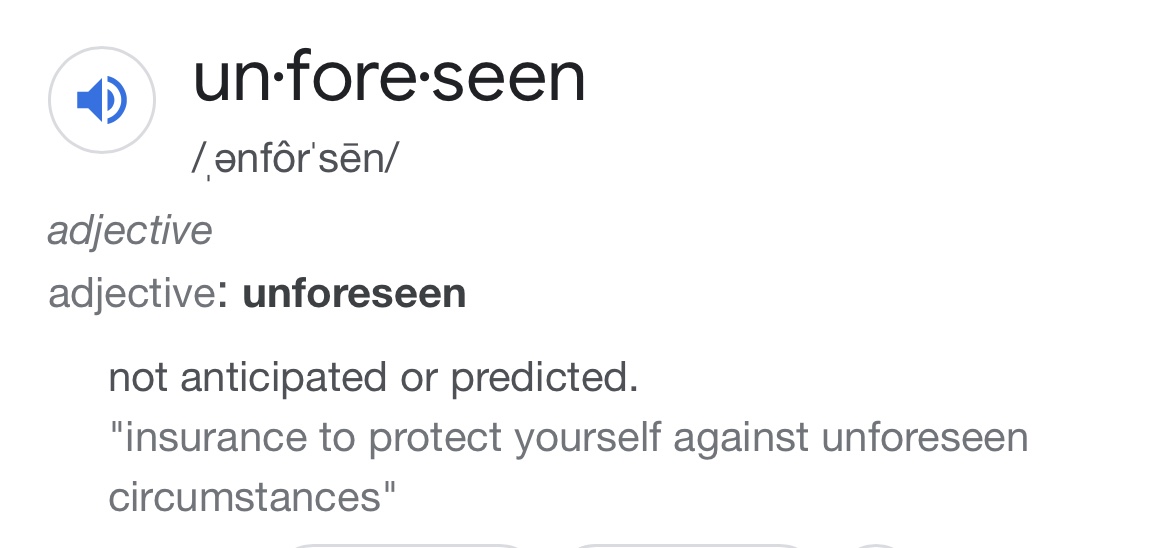
Y’all remember when “sloppy wet kiss” was sung in churches a good many years ago? Thank the kind Lord for Crowder’s good save with “unforeseen kiss.” It’s way more proper for the Sunday morning crowd.
In the opening act of Ephesians, Paul starts off with a love sonnet from heaven. It’s like a kiss we weren’t expecting. There’s nothing sloppy about it; it’s pure poetry.
Twelve verses. Two hundred and one words. And get this: one single sentence in the Greek New Testament! Paul lays it on pretty thick and in a way the church won’t ever forget. Dear Ephesus saints, How does he love thee? Let me tell you the ways… He obviously got carried away with his subject.
Paul takes us scuba diving into the great ocean of God’s love without equipment. Take a deep breath, he instructs. When we come up we’re gasping for air.
Paul doesn’t want us to interrupt his flow so he opens up the fire hydrant. We stand there with our tiny spoons trying to catch a sip. It’s okay, he says, you won’t get it all at first, but I just gotta get it out!
We’re meant to be astounded. God’s love is supposed to drown us. He means for us to have a hard time catching our breath. He wants us weak at the knees when he sets his affection on us. Even while we were yet sinners, he loved us.
When we were more loathsome than the beggar on the dunghill, and of so degenerate a spirit as to embrace our shame, and glory in our infamy – then was the time of love – then our Redeemer said, “I have betrothed thee to myself in righteousness, and in judgment, and in faithfulness; I have betrothed thee to myself forever.”
—Letters of Henry Venn, 1776
I’ve done my share of weddings in forty years of ministry. When “the moment” comes, the long-awaited finale, there’s usually a fun pause before I ask the couple to seal their pronounced love with a kiss. I admit to thinking on the rare occasion, They don’t look like they go together. Yet there they stand, unblushingly, in an unbreakable union.
Near the end of Paul’s great run-on sentence he said, “When you heard the gospel (his love song), you believed (said ‘yes’), and you were ‘sealed’ to him forever.”
The following excerpt needs little in the way of a set-up. You’ll likely see the gospel lovingly hidden inside the story before you get to the last sentence. But that last sentence is a treasure of words that could artfully say everything about How He Loves we need to know.
I stand by the bed where a young woman lies, her face postoperative, her mouth twisted in palsy, clownish. A tiny twig of the facial nerve, the one to the muscles of her mouth has been severed. She will be thus from now on. The surgeon had followed with religious fervor the curve of her flesh; I promise you that. Nevertheless, to remove the tumor in her cheek, I had to cut the little nerve.
Her young husband is in the room. He stands on the opposite side of the bed and together they seem to dwell in the evening lamplight, isolated from me, private.
Who are they, I ask myself, he and this wry mouth I have made, who gaze at and touch each other so generously, greedily?
The young woman speaks, “Will my mouth always be like this?” she asks. “Yes,” I say, “it will. It is because the nerve was cut.” She nods and is silent. But the young man smiles. “I like it,” he says, “It’s kind of cute.”
All at once I know who he is. I understand and I lower my gaze. One is not bold in an encounter with a god. Unmindful, he bends to kiss her crooked mouth and I am so close I can see how he twists his own lips to accommodate to hers, to show her that their kiss still works.
When I got to college I wanted to try out for a choir. I didn’t want the men’s choir because I liked chicks too much. The Concert Choir sang cooler songs than the rest, but my roommate was in the ‘Weigle’ choir and got me an audition with the director. In a tiny room with just him and a piano, I sweated bullets, but made it.
The choir was named for Charles Weigle whose greatest contribution to the world of church music was the song, “No One Ever Cared For Me Like Jesus.”
All my life was full of sin when Jesus found me;
All my heart was full of misery and woe,
Jesus placed His strong and loving arms about me
And He led me in the way I ought to go.
No one ever cared for me like Jesus,
There’s no other friend so kind as He;
No one else could take the sin and darkness from me,
O how much He cared for me.
—Charles F. Weigle
File this in “Unforeseen” (as in, Didn’t see it coming).
Totally unexpected.
The Jesus of Glory and sinners like us. We’re a match made in heaven. We sure don’t look like we go together, but every morning we wake up and as angels bow to watch our full redemption played out, we can remember a very long, breathless sentence in the Bible that assures us the kiss still works.
Selah, beloved. Happy Friday.
[tipjarwp mode=”button” link_text=”Click here to buy me a coffee ☕️ Thank you!” open_style=”in_place”]
My friend, Joshua, has been published here before and I wanted him to share more of his grace story; he’s graciously obliged, as you’ll see. Joshua is an on-staff missionary with Frontline Missions in Atlanta, spending much of the year leading teams on short-term mission trips in Central and South America.
2 Corinthians 12:9 (ESV) But he said to me, “My grace is sufficient for you, for my power is made perfect in weakness”, therefore, I will boast all the more gladly of my weaknesses, so that the power of Christ may rest upon me.
As I sit in front of this computer trying to gather a train of thought, I cannot help but think, “How did I get here?” — here, writing a blog post about God from my point of view. It is such a picture of God’s amazing grace. For the past four years I have been labeled a “missionary.” I have been to numerous countries, preached in countless churches, and hiked to remote areas; I have met with senators and congressmen and have seen healings and miracles. I have seen hundreds, quite possibly thousands, come to know the Lord. However, I cannot help but look back and think “Why God? Why me?”
For years I lived a double life. On the one hand I lived as a “Christian” and yet I had no real relationship with God. My family thought everything was fine, but I headed down a rough path filled with drugs and alcohol. Eventually God pulled me out of that mess and led me into the discovery of Him.
When I found my way back to God, I knew that He wanted me to go into missions. I contacted Alan Winter at Frontline Missions, met with him and began traveling to Honduras regularly. At first, I felt overwhelmed and under-qualified because of my shadowed past, but Alan saw something in me. God used Alan to show me how He saw me – as His son. I began to realize that when you are in the will of God and obedient to Him that it doesn’t matter how qualified you are or what kind of life you had.
He is in control. When we surrender ourselves to God in the midst of our weaknesses, we able to give our fear and doubt to Him and allow His strength to shine through.
By the end of 2016, I was confident in my position at Frontline and with hope I anticipated all that God had planned for the future. However I had no idea of the challenges that lay in store. Before our first trip to Honduras in January, I received news that a close friend of mine had passed away. Horrified at the news, I contemplated not going on the trip but as the team leader I was needed in Honduras. As I left the country I prayed, “God, please make this trip smooth. I can not take much more emotional stress.”
Three weeks into the trip, I was reeling with shock as a second translator of ours lost close a family member, and suddenly had to leave to be with her family. Shortly after, a close friend and community leader in Honduras was murdered just days after we had dinner in his home. I took my anxiety and worry to God and begged, “Please make this trip go smooth. I can not take much more.”
After picking up our last mission team and heading back to the village where our friend was killed days before, I received a message from a coworker in Colombia. Alan had a stroke while on his way to Colombia with another mission team and had been hospitalized.
In an instant my world was upended.
Alan wasn’t just my boss. He had seen something in me years ago and had trusted me with so much, he mentored me and entrusted me with leading teams. He treated me as a son. I didn’t know what to do with all of my anguish and sorrow and so I did the only thing I could: I clung to God, relying on Him to guide me.
For the next week, news trickled as Alan’s condition continued to get worse. He eventually was life-flighted to the United States. God became my rock in that week because inside I was a mess. When I was finally able to return home, I visited Alan at the hospital. I stood next to his bed, crying and asking God to heal him. I didn’t want to imagine life without my mentor and spiritual father. Alan passed away a few days later.
Shortly after Alan’s death our organization steadily continued on, especially since our biggest trip of the year was nearing. In the few weeks prior to the trip, our core team staff took the lead of this huge trip, a position Alan once held. I took the lead in logistics, and managing the team, due to my frequency leading teams to Honduras. Despite the size of the team I was confident and prepared, or so I thought.
Just three days into the trip, I was coaxed into a game of soccer, which ended with me on the ground holding my knee. By the grace of God there was an orthopedic surgeon with our team, who checked me out and informed me that I had torn my ACL. Again, I questioned God, but I felt the need to persevere. I was able to finish leading the team thanks to my coworkers that co-lead the trip. Just two weeks after returning back to home I was on an operating table.
In the weeks following my surgery, I was at home, alone. The enemy worked his way in, and I became depressed. It was as if all the things that had happened in the previous months all caught up. I struggled as my mind began to go to dark places. I began thinking about my friend’s death, our hurting translators, my friend that was murdered, my boss, my knee, and of the debt that it was bringing me. I remember sitting in the shower screaming and crying out to God because I could not handle it. “ Why is this happening God! I told you that I couldn’t take anymore!” In those moments of darkness when I was at my lowest, that was when I felt God lift me up.
I felt God whisper to me amongst my yelling,
“Joshua, have I left?”
I responded “No?”
Then I heard Him say,
“Through it all, I was with you. I have never left you Joshua!”
Although I am still young, I realize just how weak I am. It has become clear how easily I am tempted and spiritually derailed. So many times in our weakness we join another group at church, or we read the next book. Instead, I think we need to take the same amount of time and effort, and use them to be with God.
I want it to be clear. What I mean is, you sit in a quite space; you turn off whatever electronic device is close, you open up your Bible and you spend more than five minutes with God. The only true medicine to our human weakness is the presence of God internally and externally. This is not a one-time thing either. it’s daily.
When we spend time with God, we grow to know God. I can admit that I am one of the weakest people you will ever meet. I struggle with depression, anxiety, selfishness, addiction, etc. I know that without God present in my life, those weaknesses creep back in and even start to look appealing. In order for me to completely turn away, I have to acknowledge my weakness, realize Gods sufficient grace, and surrender my will and myself, over to Him.
Jesus said we must be first drawn to the gospel of salvation by the will of the Father (John 6:44). We don’t come on our own; we are invited. I once heard a renowned Reformed preacher explain the word “drawn” in that passage as being dragged along against our power and will, even kicking and screaming, if necessary.
Okay, I get it that God must make the first move, and that we are found in a place where we want nothing to do with him. True. However, I don’t think people come into the Life of Christ kicking and screaming. That just doesn’t have the ring of new life to me.
For sure, when the gospel first intrudes upon our well-defended lair of sin and autocracy, we flail and curse and spit and strike out. Yes to all of that!
But then, grace does something to us.
It holds us like a mother holds on for dear life to an unruly, flailing child, and the spirit of compassion causes that rebel heart to melt into submission, then surrender, and, finally, finding rest (Matthew 11:28). Yeah, I’m pretty confident we’re not dragged into the kingdom. We come happily; skipping and leaping, like calves released from their confinement.
“The favored souls [who respond to the gospel of Christ] are not compelled by an unwelcome force to embrace salvation, but are sweetly and lovingly inclined through the soft influences of heavenly grace to choose, delight in, and appreciate the work and service of Emmanuel. They are made willing. Their whole heart goes forth towards the Savior…
“They love the Lord Jesus Christ in sincerity. They embrace him as their only Savior and
his precepts as their only rule,
his promises as their only support,
his cross as their only glory,
his righteousness as their only boast,
his heaven as their only home.
If, then, I belong to this happy number, I must be willing to be saved on God’s terms, to delight in his salvation, to choose his ways.”