
the sixth estate of mary

Photo ©️ Scott Mitchell

But this is the one to whom I will look:
(s)he who is humble and contrite in spirit
and trembles at my word. Isaiah 66:2

The cries of ‘fake news’ co-opt the headlines and such affrontery to our nation’s fourth estate has them screaming to the hills and college coeds to their safe places.

It seems there’s no end nor coming out from under a hodgepodge of hot mess issues these days:

Collusion.

Sexual predation.

Tyranny.

Police brutality.

Virtue signaling hashtags.

Twitter rants.

Evergreen.

The fourth estate is in the middle of every one. We have the Europeans to thank for introducing the world to the idea of ‘estates’ (or powers) to divvy up the socio-cultural economy of the realm. As they saw it, clergy were the first estate [!], nobility came second, and commoners got slotted at the bottom. These were the people with varying degrees of power, from most to least.

Modern tweaking of the estates has added a fourth: a nation’s free press. Pardon me while I stifle a giggle to their being regarded as lower than the low. Now still a fifth estate has been added to accommodate for bloggers and such (yay me!).

Side note: I’m pretty sure clergy in this post-christian era are bound to get a rethink in the rankings. 

That’s all well and good but there’s another estate few talk about – outside the Bible, that is. It’s a level so low it has to look up to see bottom. Even the dregs and dreck of social media score higher than these misfits. 

Who are the sixth “estate”? Before I answer, let’s go back to the fourth and fifth estates where we find the press, the expanded media, and self-acclaimed journos. In the Christmas story these would include the lowly shepherds who first saw and reported the fair and balanced story of the Incarnation. (The priests, the puppet governor Herod, and upperclass of Israel had their moments in the story too)

The biblical ‘fourth and fifth estate-types’ were not congenial, gentle, cuddly guys, mind you. They were rough-and-tumble blue collar herdsman, branded unclean and unfit for public life. But kudos to them on this day: they got the story first and they got it right, which is why we love putting shepherds in our church plays.

But there’s yet a lower estate.  Probably the most important figure in the nativity story other than Jesus puts herself in this category. Here’s how Mary self-identifies: 

My soul magnifies the Lord,
and my spirit rejoices in God my Savior,
for he has looked on the humble estate of his servant. (Luke 1:48)

Photo ©️Scott Mitchell

“Humble estate.”

This is Mary’s place in the Kingdom. The word she uses, translated to Greek, means to be ‘(forcibly) bent,’ carrying about the weight of humiliation. Her world had pushed her down, a bent reed in the footpath of the self-absorbed.

“Why me?” indeed.  

Young Mary was a nobody, underfoot, and flattened by oppression and injustice – first as a Jew, then as a woman, and finally with no estate but a Nazarene bloodline. All the other estates stood atop her, over her, apart from her. Even the fourth/fifth estate were dazzled by an angel choir and an audience. Mary was serenaded by the gentle lowing of farm animals. The shepherds rejoiced and told the news. Mary sat and “pondered.”

But may I suggest yet another estate? This one – and this one alone – belongs to Jesus. His is the seventh estate, for,

…though he was in the form of God, did not count equality with God a thing to be grasped, but emptied himself, by taking the form of a servant, being born in the likeness of men. And being found in human form, he humbled himself by becoming obedient to the point of death, even death on a cross.

Selah, beloved. Even if you’re in the first through third estates, ‘tis nobler to share in the sixth with Mary, which is the spirit of Christmas faith, only made possible – and lifted up – by the Seventh.

IN RESPONSE

What do I do with this, I’m asking myself. How do I apply this? What is ‘this’ you ask? Put simply, identifying with Mary’s estate (Isa 66:2).

How must I walk it out? The answer beckons me to deep repentances and costlier amens than I’ve ever known. Will you pray for me? And, if you’ll ask, I’d be honored to pray for you.

a grace story (guest post)

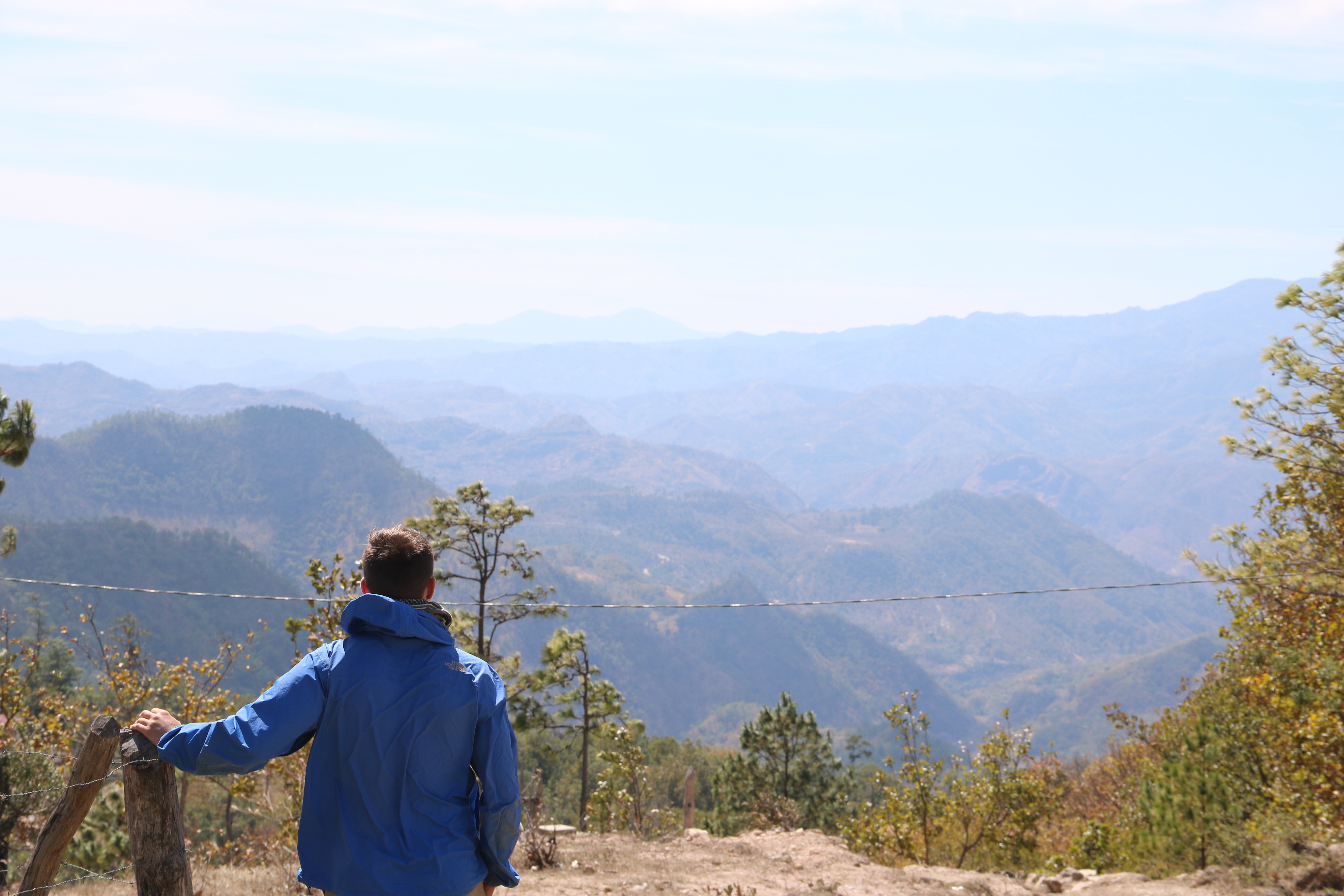
My friend, Joshua, has been published here before and I wanted him to share more of his grace story; he’s graciously obliged, as you’ll see. Joshua is an on-staff missionary with Frontline Missions in Atlanta, spending much of the year leading teams on short-term mission trips in Central and South America.

2 Corinthians 12:9 (ESV)
But he said to me, “My grace is sufficient for you, for my power is made perfect in weakness”, therefore, I will boast all the more gladly of my weaknesses, so that the power of Christ may rest upon me.

As I sit in front of this computer trying to gather a train of thought, I cannot help but think, “How did I get here?” — here, writing a blog post about God from my point of view. It is such a picture of God’s amazing grace. For the past four years I have been labeled a “missionary.” I have been to numerous countries, preached in countless churches, and hiked to remote areas; I have met with senators and congressmen and have seen healings and miracles. I have seen hundreds, quite possibly thousands, come to know the Lord. However, I cannot help but look back and think “Why God? Why me?”

For years I lived a double life. On the one hand I lived as a “Christian” and yet I had no real relationship with God. My family thought everything was fine, but I headed down a rough path filled with drugs and alcohol. Eventually God pulled me out of that mess and led me into the discovery of Him.

When I found my way back to God, I knew that He wanted me to go into missions. I contacted Alan Winter at Frontline Missions, met with him and began traveling to Honduras regularly. At first, I felt overwhelmed and under-qualified because of my shadowed past, but Alan saw something in me. God used Alan to show me how He saw me – as His son. I began to realize that when you are in the will of God and obedient to Him that it doesn’t matter how qualified you are or what kind of life you had.

He is in control. When we surrender ourselves to God in the midst of our weaknesses, we able to give our fear and doubt to Him and allow His strength to shine through.

By the end of 2016, I was confident in my position at Frontline and with hope I anticipated all that God had planned for the future. However I had no idea of the challenges that lay in store. Before our first trip to Honduras in January, I received news that a close friend of mine had passed away. Horrified at the news, I contemplated not going on the trip but as the team leader I was needed in Honduras. As I left the country I prayed, “God, please make this trip smooth. I can not take much more emotional stress.”

Three weeks into the trip, I was reeling with shock as a second translator of ours lost close a family member, and suddenly had to leave to be with her family. Shortly after, a close friend and community leader in Honduras was murdered just days after we had dinner in his home. I took my anxiety and worry to God and begged, “Please make this trip go smooth. I can not take much more.”

After picking up our last mission team and heading back to the village where our friend was killed days before, I received a message from a coworker in Colombia. Alan had a stroke while on his way to Colombia with another mission team and had been hospitalized.

In an instant my world was upended.

Alan wasn’t just my boss. He had seen something in me years ago and had trusted me with so much, he mentored me and entrusted me with leading teams. He treated me as a son. I didn’t know what to do with all of my anguish and sorrow and so I did the only thing I could: I clung to God, relying on Him to guide me.

For the next week, news trickled as Alan’s condition continued to get worse. He eventually was life-flighted to the United States. God became my rock in that week because inside I was a mess. When I was finally able to return home, I visited Alan at the hospital. I stood next to his bed, crying and asking God to heal him. I didn’t want to imagine life without my mentor and spiritual father. Alan passed away a few days later.

Shortly after Alan’s death our organization steadily continued on, especially since our biggest trip of the year was nearing. In the few weeks prior to the trip, our core team staff took the lead of this huge trip, a position Alan once held. I took the lead in logistics, and managing the team, due to my frequency leading teams to Honduras. Despite the size of the team I was confident and prepared, or so I thought.

Just three days into the trip, I was coaxed into a game of soccer, which ended with me on the ground holding my knee. By the grace of God there was an orthopedic surgeon with our team, who checked me out and informed me that I had torn my ACL. Again, I questioned God, but I felt the need to persevere. I was able to finish leading the team thanks to my coworkers that co-lead the trip. Just two weeks after returning back to home I was on an operating table.

In the weeks following my surgery, I was at home, alone. The enemy worked his way in, and I became depressed. It was as if all the things that had happened in the previous months all caught up. I struggled as my mind began to go to dark places. I began thinking about my friend’s death, our hurting translators, my friend that was murdered, my boss, my knee, and of the debt that it was bringing me. I remember sitting in the shower screaming and crying out to God because I could not handle it. “ Why is this happening God! I told you that I couldn’t take anymore!” In those moments of darkness when I was at my lowest, that was when I felt God lift me up.


I felt God whisper to me amongst my yelling,


“Joshua, have I left?”


I responded “No?”


Then I heard Him say,


“Through it all, I was with you. I have never left you Joshua!”

Photograph © Scott Mitchell

Although I am still young, I realize just how weak I am. It has become clear how easily I am tempted and spiritually derailed. So many times in our weakness we join another group at church, or we read the next book. Instead, I think we need to take the same amount of time and effort, and use them to be with God.

I want it to be clear. What I mean is, you sit in a quite space; you turn off whatever electronic device is close, you open up your Bible and you spend more than five minutes with God. The only true medicine to our human weakness is the presence of God internally and externally. This is not a one-time thing either. it’s daily.

When we spend time with God, we grow to know God. I can admit that I am one of the weakest people you will ever meet. I struggle with depression, anxiety, selfishness, addiction, etc. I know that without God present in my life, those weaknesses creep back in and even start to look appealing. In order for me to completely turn away, I have to acknowledge my weakness, realize Gods sufficient grace, and surrender my will and myself, over to Him.

– Joshua Vineyard, October 2017

I Wonder If There Were Cowbirds at the Manger

image
A female cowbird photographed through our dining room window on Christmas morn. She told me a story.


I had a new visitor Christmas morn.

While my bride battled a head cold on the sofa near the Christmas tree (one of seven displayed throughout our home), I brewed my morning coffee as the rain-soaked sky continued to gloomy-gus over our hamlet. Listening to the Keurig spit out my favorite Dark Magic blend (wish Green Mountain would choose a less nefarious name), I took my watch at the kitchen window to see the haps at the feeder. In that moment I noticed an unfamiliar addition to our backyard collection.

A genteel cowbird perched there amid raindrops, for all the world like she owned the place. Only, I’d never seen one in our yard before this.

Immediately, I went to the old bookcase (my iPad) and pulled a volume from the row of World Book encyclopedias (Google) to study what I could glean on the subject of brown-headed cowbirds.

I learned the female cowbird spends its energy on laying eggs, not building nests. And she’ll lay a lot! She’ll place her eggs in other birds’ nests (ranging from as many as 140-220 other host species), hoping her young will be favorably treated and cared for.

Just so, the Christmas blessing: God placed His Son in the borrowed ‘nest’ of a young woman who raised Jesus as her own, treasuring her Gift and releasing Him for His eternal work of redemption, desiring all to choose the Son of God.

I also discovered that many momma birds who get wise to the insertion of an alien egg will destroy it or cast it out. A female warbler might even construct a new nest on top of the original one now bearing the undesired foreigner. This reminded me that Jesus was “despised and rejected” by many (still the case) and “there was no beauty found in Him that earth-dwellers should desire Him.”1

One last τυπος (type) I uncovered from the cowbird’s relation to the message of Advent has to do with the Advent that we now long for: the return of Messiah to establish His visible Kingdom of righteousness and justice and rule over the nations of the earth.

It probably shouldn’t shock you to learn that mother cowbirds have been known to visit the nests of the birds that mistreated and rejected her young and completely destroy their dwellings. Um, I’ll just leave this right here and let you draw your own conclusions.

All this got me thinking: I wonder, amid the oxen and sheep, a donkey or two, and perhaps a spare milk-cow, there might not have been some birds flitting quietly about at the feeding-trough that Silent Night in Bethlehem.

I wonder if the Father might not have arranged to have a momma cowbird among the manger’s visitors. If the young parents of their firstborn had noticed, they might have understood more of the significance of that bundle. Perhaps, perhaps not. All I know is I saw it (again) this Christmas morn.


1 See Isaiah 53:2,3