One of my former parishioners, a longtime friend, contacted me about some books I left behind in our former church’s library and asked if I might be interested in receiving them back. One of them looks like a Father’s Day gift from Graham, he said. Of course I wanted it!
Seven-year-old Graham thought his dear old dad could use a book of devotional readings geared for men. Although I read many of its 365 entries in 1997, I never finished it. I thought it might be a good idea — in honor of my son’s wishes — to plow through its 400-plus pages again.
Its daily readings feature a selection of writings from various respected Christian authors and ministers. Some are unfamiliar to me but others I know all too well.
Here’s the thing. I built up a good head of steam reading the daily selections, feeling nourished by some insights I found therein, but one day I hit on one that stopped me cold. The writer was recognizable to me as a man who had just filled the headlines with substantiated charges of adultery. I decided to skip that day.
A few days later, another blighted pastor was featured. I skipped that one too. Two days hence, yet another disgraced man of God. Three fallen preachers in one week, in a book designed ‘for men seeking integrity.’ The irony was crushing. I mean, What are we even doing here?
These discoveries forced a question: What testimony am I building? I’ve catalogued a great many blog posts, spiritual essays, and sermons through the forty years I’ve been preaching. Do I want someone to come across something I’ve written twenty or thirty years from now and have them say, “no thanks, I’ll skip this guy”?
I’m privileged to be a part of a rotation of teachers for our church’s Thursday night men’s discipleship gathering. Each of the last two weeks I shared from Paul’s final words to Timothy.
I have fought the good fight, I have finished the race, I have kept the faith.
2 Timothy 4:7
It’s telling that I haven’t spent my time condemning those men who failed, but instead I’m taking stock of my own testimony. Lord knows I still have things the Spirit is working to redeem, and while I certainly have my share of disappointments and failures, I’m grateful to have the public testimony of a preserved faith. I’m holding on to that like a precious treasure.
A proverb reminds us to “Guard your heart above all else, for it is the source of life” (Prov 4:23, CSB). If the citadel is taken by the enemy, the whole town has to surrender. If the enemy overtakes our spiritual loves and affections, our entire testimony will collapse into rubble. People won’t remember our glory days; they’ll only recall how we fell on our swords.
Prisoner Paul then makes a bold admission. He says “I’m ready, Timothy. I’ve been a lifelong warrior and I’m going out on my feet! I’ve done all that God commanded me to do. I’ve finished the race, gutting it out to the very last mile.”
There were a lot of battles and bruises that preceded such a declaration. In one harrowing passage, Paul recounted all the bloody miles of his marathon that led up to his finish line. Fought the good fight, indeed.
And then I remembered another fight the apostle had: with himself.
I run the race then with determination. I am no shadow-boxer, I really fight! I am my body’s sternest master, for fear that when I have preached to others I should myself be disqualified.
1 Corinthians 9:26-27 (JBP)
As if the world, the flesh, the devil, and religion aren’t enemy enough, we’ve got to face off with the man in the mirror every day of our lives. We’ve got to box ourselves, beat ourselves black and blue (the Greek in verse 27 means to bruise your eye), and train ourselves in godliness.
Paul said his hardest opponent was Paul. Alexander did him much harm, but Paul needed to be brought to the mat. Demas forsook him, but Paul needed to go all Rocky on himself. Hymanaeus had to be turned over, but Paul needed a black eye. The Corinthians were a source of endless consternation, but Paul stood toe-to-toe with himself every day of his life.
One of the great things about coming to the finish line — for me — will be to finally be done with this world, the devil, and myself. I get so tired of me. But if the word of God is true – and it is – it’s a good fight, a noble fight, a necessary fight.
If Scott Mitchell doesn’t want his testimony to be ‘skipped over’ some day, he’s going to have to daily go toe-to-toe with himself in the ring and punch himself in the nose, not box the air.
Winning takes training and discipline. It takes black eyes and bruised faces and broken noses to be able to say, “I’ve fought the good fight.”
That’s how I want to go out: black and blue and…ready like Paul.
[This is from a talk I was blessed to offer to some really great (weak) Dads at 6:30 yesterday morning…]
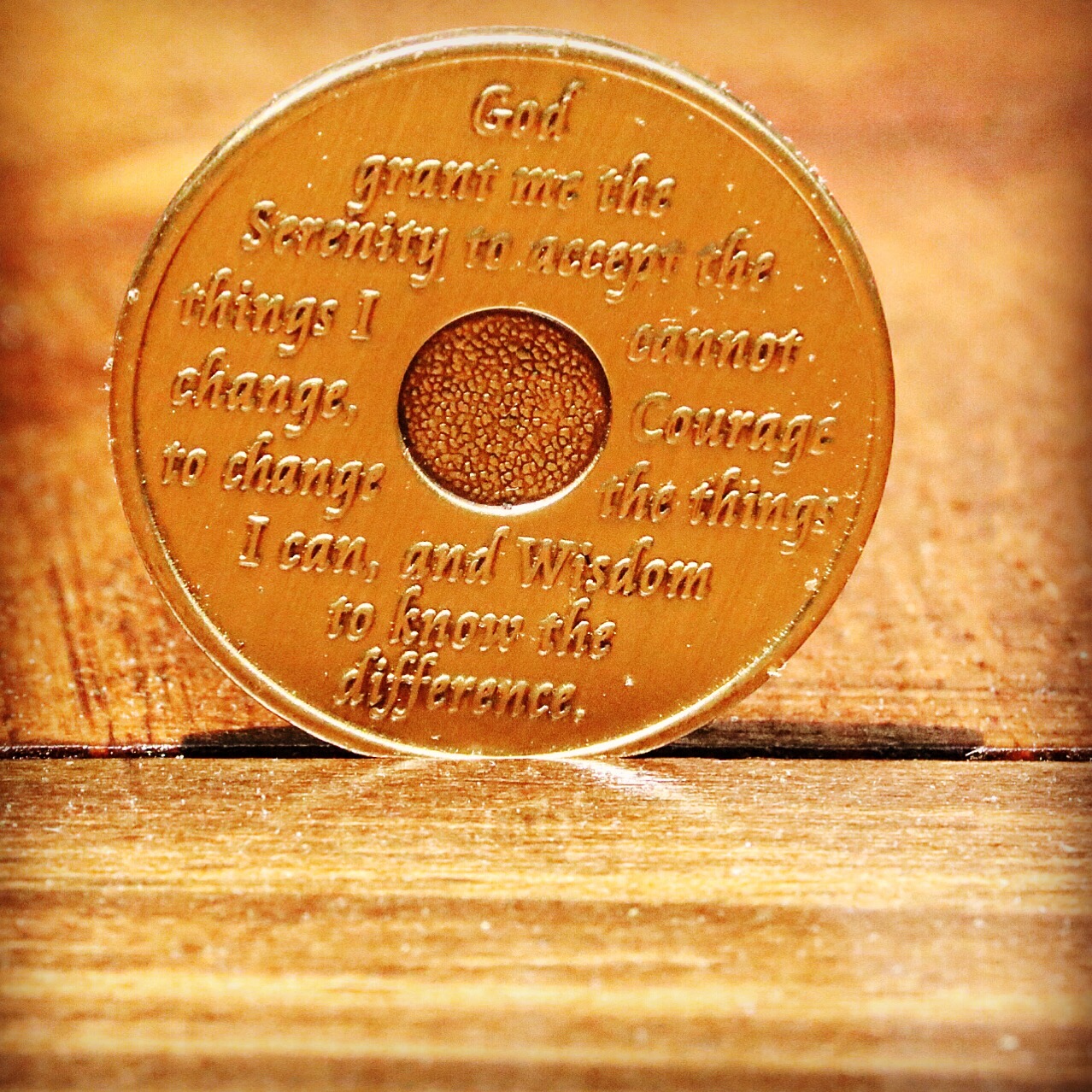
After the talk a guy walks up to me, wiping away tears, and sits down. He says “I’ll be your son.” We hugged, wept, and I learned his own story of addiction and recovery. He pulled out his 5-year sobriety chip and handed it to me. “I want you to have this,” he said. “It’ll remind you that your son’s struggle is over and his chains are gone.” I humbly received this amazing gift and told him, “5 years sober? Do you know how the ancient followers of God saw the number 5? They said it represented grace and redemption.” This is our hope, our message, our undying belief: what the enemy means for evil, God turns it for good.
I have the distinction of being a dad though childless. I had one son and I lost him to heroin. If ever you’ve known a weak, helpless dad, I’m one. Believe me. However,
“I am not ashamed (the Greek includes having no fear of it letting me down, no embarrassment in its being insufficient, or no guilt of my being unable to merit its blessings) of the gospel for it is the power of God to salvation…”
I had a pastor friend who consoled me years ago – at the apex of my son’s rebellion – by reminding me God had His own prodigal *children* – not just a prodigal child. His whole family was profligate!
God laments that in Isa 1:2:
Hear, O heavens, and give ear, O earth; for the Lord has spoken: “Children have I reared and brought up, but they have rebelled against me…”
David, too, had a pretty rough go at being a dad – some say he was too lenient because his dad was too hard on him and aloof because he was often overlooked. I was struck recently by the unfulfilled ‘dad-dream’ of David in 1Chron 29:19 –
“Grant to Solomon my son a whole heart that he may keep your commandments, your testimonies, and your statutes…”
But this is what he got –
1 Kings 11:4 “For when Solomon was old his wives turned away his heart after other gods, and his heart was not wholly true to the Lord his God…”
He wanted a son who would expand the kingdom, establish peace throughout the realm, and, chiefly, have a WHOLE HEART for God. Instead, the kingdom divided, unholy rulers would reign from Jerusalem for many generations, and the nation would always stray, come home, get restless, and leave home again.
This was pretty much the staus quo of Israel because his son couldn’t keep it in his pants. Oh, that, and Solomon became an enabler for child-sacrifice (a nation’s most heinous sin, hint, hint), plus the fact he couldn’t nurture a WHOLE HEART for God, but a HELL HEART, an EMPTY HEART due to rebellion and chasing after wind.
I remember holding my newborn adopted son alongside my wife in front of Mountain View Church in 1989 as we dedicated Graham (namesake of the great evangelist) to the Lord. If you’d told us at Sunday dinner afterward how it would turn out, I’d have taken issue.
He was a miracle.
He was a joy.
We could take him everywhere.
He was raised in church.
He loved being a PK.
He was fiercely protective of his disabled dad.
He volunteered for mission trips.
He gave his only pair of shoes on one trip to a kid in Honduras.
He always gravitated to the most outcast kid in the room.
His heart was so big, so generous, so fierce, and so alive in the moment.
But our son battled unknown, untold demons.
So…
Graham chose a harder path, one steeped in rebellion and addiction, spending the lion’s share of his youth and young adulthood in the far country of Fool’s Folly – all uphill and adventure on the ascent with the slippery slope of guilt, shame, and death on the backside.
He was found in December all alone in an abandoned parking lot, frozen, with a heroin needle in his arm. His mates had put a portable heater in the car, shut the door behind them, got another ride and left him alone there in the night. They did care enough to call 911 after they were long gone and, while there were no vitals at the scene, the doctors put him on a vascular by-pass machine in hopes to ‘jump-start’ him by warming him up, he was so cold. None of the doctors gave much chance of that happening, however.
When Sandy and I (1,123 miles away) got the news (she at work, me at home), we immediately sought the Lord.
Will our boy live? If he dies, will he be with You? How will we know? Lord, HAVE MERCY! Christ, HAVE MERCY!
I have to admit, my theology would’ve struggled to put Graham anywhere else but hell right then. It’s horrible to admit, I know. My own son!Oh Absalom, my Absalom!
God knew that, and He met my unbending dogma with – what else? – the Gospel (not easy-believism, mind you; remember, God acted in mercy to discipline my son so dramatically; Graham always had a place for Christ in his heart, no matter how covered over with sin it was). I needed the Gospel more than anything. I needed His Good News to break into my world of bad news.
In those moments – as Sandy raced through the warehouse and parking lot of UPS to her car, and as I sat in a stupor at our dining room table – with an open Bible – God preached the gospel tenderly to us in the only ways our agonized hearts would both get it. He cued a worship song on her car radio, and to me He gave a pointed scripture. Tomlin’s “Amazing Grace (My Chains Are Gone)” was the first thing my wife heard as her car roared to life. Psalm 85:2,3,8-10 was my portion in the exact moment He was singing over Sandy on Fulton Industrial.
“You forgave the iniquity of your people; you covered all their sin. Selah You withdrew all your wrath; you turned from your hot anger…
Let me hear what God the LORD will speak, for he will speak peace to his people, to his saints; but let them not turn back to folly. Surely his salvation is near to those who fear him, that glory may dwell in our land. Steadfast love and faithfulness meet; righteousness and peace kiss each other.”
We got our answer immediately, even independently. “Graham is here with Me.”
Four years earlier, God told us to stop fretting, toiling, enabling, bearing guilt, hearing the accuser say “if you had only…if you didn’t…if you never…if you hadn’t” and trying to “fix” our son. I was tired of failing as a Dad. Harsh words and illogical punishments were clearly not working. I was weak, helpless, and totally out of options. Hope was elusive. My wife pulled away from life and cried, prayed, pled, and begged. We were both at a loss.
LORD, SAVE US! REDEEM THIS!
The Father asked us to do a very hard thing: let go. To do this was to admit we couldn’t. We were ‘failures’ at parenting. While learning to trust God to parent our boy was humbling, sure, but it was also one of the most freeing things we ever imagined. So we did, and that mercy gave my wife and I four whole years to heal and prepare for December 16, 2013. It was during this time God spoke clearly to my broken-down Dad heart: “from now on, when your son calls for money, give it to him – NO QUESTIONS ASKED. When he needs an emergency place to crash, you are not to refuse him. Kill him with kindness.”
On the last night we ever saw him, because the next day he would move to Minnesota to live with his birth-mom and get away from the mean streets of Atlanta, my wife took him shopping and bought him a whole new “Minnesota wardrobe.” Her only child, whom she was sending to live with the mother who didn’t raise him – with no guarantees she’d ever see him again – she took him out and spoiled her boy one last time. She mercifully killed him with kindness.
In the end, it was the Gospel that saved our family. And it was the Gospel that rescued my son from his hell on earth.
“I am not ashamed of the gospel for it is the power of God for salvation…”
The Gospel that got us through was:
“I am for you.”
“I will not leave you alone in this mess.”
“Trust Me to redeem this and bring you through.”
Paul, a weak, suffering apostle, said:
“The Gospel is the POWER – the δυναμις – of God for salvation…”
Then he proceeds to develop what salvation is throughout his long letter. He says it’s sufficient to forgive, cleanse, and justify us before a holy and vengeful God. He further says it brings us into Life with God, not only saving us from sin and hell, but empowering us for holy living and fitting us for glory. Finally, he blows us away with the future hope of our ultimate glorification and eternal joy as “sons of God”!
Paul says it’s all predicated on the Gospel.
Paul says our daily survival is grounded in the Gospel.
Paul said our only power comes from the Gospel
Paul says our only hope is…the Gospel.
Scott Sauls wrote “the gospel isn’t merely a message but a power because it’ll change you.”
Of the 6 words for power, Paul chose the one that best describes divine energy. He says the Gospel is “dynamic”! (Dynamite comes from this word – Rome, you know, was all about power – Paul said the Gospel was more powerful still!)
Dictionary.com: 1. pertaining to or characterized by energy or effective action; vigorously active or forceful; energetic.
What does the Gospel mean for weak, helpless Dads?
The Gospel is our daily power:
as men in this culture, husbands to our wives, and dads to our kids!
What does the Gospel tell us?
• How lost we are. • How loved we are.
(“You’re a good, good Father, that’s who You are And I’m loved by You that’s who I am”)
It also tells us:
• How weak and helpless we are. • How strong and capable He is.
Tell me something: is the Gospel only useful and powerful to get us to heaven? Or is it the power of God to get us through this life? This day? This trial? This heartache? This situation?
Take it from me: GOD IS GOOD. Take it from me: GOD LOVES WEAK DADS Take it from me: HE STILL WORKS EVERYTHING – EVERYTHING! – TOGETHER FOR OUR GOOD AND HIS GLORY Take it from me: HE’S STILL MAKING ALL THINGS – YOUR THINGS, MY THINGS – NEW Take it from me: THE GOSPEL IS STILL GOOD NEWS Take it from me: THE GOSPEL IS STILL THE POWER OF GOD – THE δυναμις – FOR SALVATION OF ANY AND EVERY SITUATION
So Let’s light this candle. How can we see Gospel power move in us, through us, for us?
Three words:
LIGHT.
THE.
FUSE.
Fill your personal universe with the gospel (Rom 1:16,17)
Unilaterally surrender to the kind demands of the gospel (Rom 4:13-26; 6:1-4)
Stand in His gospel grace that equips you for everything…and anything (Rom 5:1-4)
Encourage yourself in the gospel promise He works everything together for our good and His glory (Rom 8:28,29)