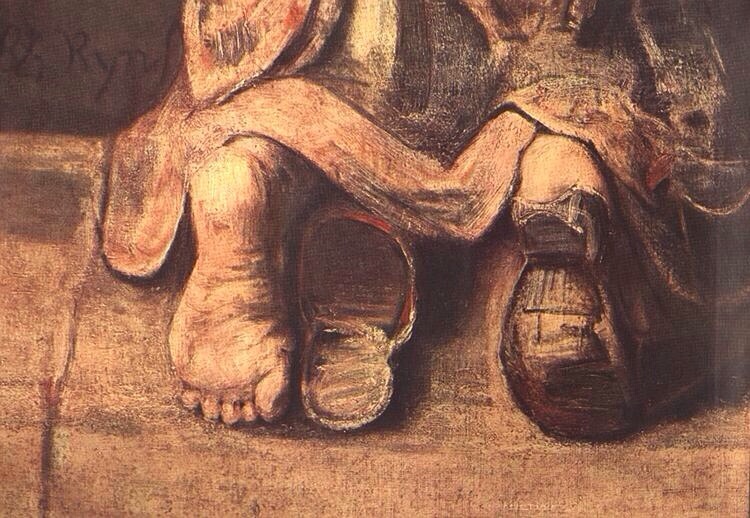
Praying Your Prodigal Home

20140309-210916.jpg

In light of my most recent posts, I thought it might be beneficial to re-share this from not so very long ago. While there’s some age to this material, no doubt its insights and encouragement are timeless. I pray it will be as meaningful to you as it has been to Sandy and me. Our prayers are with you as you wait on the front doorstep for your miracle.

Peace.

HOW I LEARNED TO PRAY FOR THE LOST

“This is the result of my search for the right way of praying for the unsaved. I have found it to produce amazing results in a very short time.

After more than 20 years of fruitless praying, it seemed that there was no possible chance for my loved ones to ever return to the faith. But after only a few weeks of the type of praying that I have outlined here, I have seen them studying the Bible by the hour and attending every church service possible. Also, their whole attitude toward Christianity has changed, and all resistance seems to be gone.

I have taken my place of authority in Christ and am using it against enemy. I have not looked at myself to see if I am fit or not; I have just taken my place of authority in Christ and have prayed that the Holy Spirit may do His convicting work. If each and every member of the Body of Christ would do this, what a change would be made in this world!

Believers everywhere are burdened for the unsaved or backsliding loved ones. However, many are praying in the spirit of fear and worry instead of faith.

This has caused me to seek for definite light on how to pray, feeling the need of praying the right prayer and also the need for a definite promise or word from God on which to base my faith when praying for the unsaved. Praise God — He never fails to give such needed help!

Perhaps because the salvation of some seemed to be an impossibility, the first verse of scripture that was given to me was Mark 10:27 – “With God all things are possible.”

The next scripture verse had occupied my attention for some time, but it took on a new meaning: “(For the weapons of our warfare are not carnal, but mighty through God to the pulling down of strong holds;) casting down imaginations [speculations] and every high thing that exalteth itself against the knowledge of God and bringing into captivity every thought to the obedience of Christ” (2 Cor. 10:4,5). This shows the mighty power of our spiritual weapons. We must pray that all this will be accomplished in the ones for whom we are concerned; that is, that the works of the enemy will be torn down.

Finally, I was given the solid foundation for my prayers — the basis of redemption. In reality, Christ’s redemption purchased all mankind, so that we may say that each one is actually God’s purchased possession, although he is still held by the enemy. We must, through the prayer of faith, claim and take for God in the name of the Lord Jesus that which is rightfully His. This can be done only on the basis of redemption. This is not meant to imply that, because all persons have been purchased by God through redemption, they are automatically saved. They must believe and accept the Gospel for themselves; our intercession enables them to do this.

To pray in the name of the Lord Jesus is to ask for, or to claim, the things which the blood of Christ has secured. Therefore, each individual for whom prayer is made should be claimed by name as God’s purchased possession, in the name of the Lord Jesus and on the basis of His shed blood.

We should claim the tearing down of all the works of satan, such as false doctrine, unbelief, atheistic teaching and hatred, which the enemy may have built up in their thinking. We must pray that their very thoughts will be brought into captivity to the obedience of Christ.

With the authority of the name of the Lord Jesus, we must claim their deliverance from the power and persuasion of the evil one and from the love of the world and the lust of the flesh. We should also pray that their conscience may be convicted, that they may listen and believe as they hear or read the Word of God. Our prayer must be that God’s will and purposes may be accomplished in and through them.

Intercession must be persistent — not to persuade God, for redemption is by God, but because of the enemy. Our prayer and resistance are against the enemy — the awful powers and rulers of darkness. It is our duty before God to fight for the souls for whom Christ died. Just as some must preach to them the good news of redemption, others must fight the powers of darkness on their behalf through prayer. Satan yields only what and when he must, and he renews his attacks in subtle ways. Therefore, prayer must be definite and persistent, even long after definite results are seen. And we must pray for the new Christian even after he begins to be established in the faith.

We will find that as we pray, the Holy Spirit will give new directions. At one time I was interceding for a soul and began to feel that my prayers were largely ineffective. Then the Holy Spirit inspired me to begin presenting that person to God in the name of the Lord Jesus. As I obeyed this leading, praying, ‘I present so-and-so to God in the name of the Lord Jesus,’ I felt that my prayers were gradually becoming more effective. It seemed that I was drawing that person from deep within the very camp of the enemy. Then I was able to proceed as usual, claiming every detail of that life for God, using the power of the blood against the enemy. This is true warfare in the spiritual realm. Thank God that our spiritual weapons are mighty and that our authority in Christ is far above all the authority of the rulers, powers and forces of darkness, so that the Enemy must yield. But it takes faith and patience and persistence.

Missionaries on foreign and home fields can resist the enemy in their districts, communities and schools by using the power of the blood of Jesus against the powers of darkness, sin and unbelief. With the authority of the name of the Lord Jesus they can demand the enemy retreat. Note that ‘it is the spirit that quickeneth the flesh profiteth nothing’ (John 6:63) and that ‘the letter killeth, but the spirit giveth life’ (II Cor. 3:6). Therefore, we must constantly seek the motivation of the Holy Spirit in our hearts, in our faith, in our prayer and in our testimony. It is most important also that we confess our own sins and have them forgiven.

The enemy will use every possible means to silence our intercession and to block our attack against him. We must not only understand our enemy, our authority in Christ and how to use our spiritual weapons but also how to wear the armor that God has provided for our protection. Thus equipped and protected, we need not have any fear. But let us always remember that we have no power and no authority other than that of Christ.

‘Now thanks be unto God, which always causeth us to triumph in Christ’ (II Cor. 2:14)

‘Greater is He that is in you, than he that is in the world’ (I John 4:4)

— L.M.
(The writer has asked her name be withheld)

_____________________________________

A final note. Our heartfelt thanks to Carey Childrey, a long-time friend and mentor, for sharing a copy of this marvelous message with us. Within weeks of posting this – knowing others needed its encouragement also – the Father ran to meet our own prodigal and welcomed him Home.

Can’t wait to share in the fatted calf with you, son.

God’s Job With Me

20131028-160517.jpg

I have a disability. I am not, however, defined by it so I don’t consider myself a disabled person but, rather, a person with a disability. More to the point, my paralysis is what God is using – my platform – to demonstrate the out-raying of of His glory to the broken and hurting world around me.

Regrettably, in 1981, before I was introduced to handicapped status, my life was anything but a bright and shining testimony. Rather than traversing about about as a vessel of honor, I was a shipwreck waiting to happen. Had I stayed that course, you would not be reading this version of my testimony, but God, who is wise and merciful, saw an opportunity and put me in dry dock for some woefully needed reparation.

Before our man Job’s colossal Trial, he was a man of moral honor and of blameless character. Here, he and I part company really fast, with a wide berth between us! Before my own divine appointment, while supposedly preparing for a life of ministry at a Christian school in Tennessee, I opted rather to trip the light fantastic my junior year and explore options more cosmopolitan and earthly. Actually, I was more titillated by the prospect of a season in sin than falling headlong into it for fear of turning permanently away from God. That notion did horrify me. So maybe not the far, far country, but a few zip codes away suited me just fine.

Soon, however, the gravitational pull of Vanity Fair overtook me and I reached inside my soul and eagerly picked out some coins and paid the fare of some of its carnival attractions. The labyrinth of neon-lit avenues soon led me down darker alleyways and the introduction to even more seedy venues. These dens of iniquity were not for those who were merely playing at sin but for those looking to be actively employed by it.

Here I felt less in control. No longer was I picking the rides and selecting booths for momentary pleasure but felt they were somehow choosing me. Thanks be to God, my skin prickled. My gut told me to run for dear life. There opened before me a way of escape and I gladfully took it.

Wending my way outward through the maze of attractions, penitently reversing my travels, the carnies looked less friendly than at first, the places and atmospheres more insidious. Just you try and leave, they threatened.

You are trapped here forever…

The tangle of sideshows kept rearranging themselves, confusing the senses, prompting me to feel less hopeful about leaving. I kept running down promising lanes, expecting to pop out onto main arteries only to run into dead-ends leaving me exasperated and hopeless.

The profane grinding of a carnival organ and its incessant melodies sped up creating even more confusion. Sadistic people with snarkish smiles whirled about me and their faces blurred and morphed into visages macabre and demonic. There, in a grotesque blend of Grimm-worthy music and amusement, in the very nexus of Vanity Fair, I stopped and cried out for a supernatural deliverance from my agonies, to the only One who could. If He would even have me.

Miracle of miracles, not only would He, but He came to me with great tenderness and mercy.

The Call of the Carnival is undeniable but the Rescue of the Redeemer is epic!

It was during this episode of Divine Intervention that a friend placed in my hand a golden gift. This friend was well aware of my forays and foraging in the far country and came alongside me to buttress me as I wobbled on renewed legs. His “gift” was a plastic case, no larger than a paperback book, containing four cassette tapes, each a separate sermon from a pastor out west. The sermons were a four-part series of encouragement for those who were hurting.

The title on the cover read, “Gold In The Making”. I was captured.

My friend told me he had listened to Pastor Swindoll’s sermons over the summer and had also been accosted by the teaching that had seemed so alien to our theology: that God uses and even prescribes suffering for His children, that they might deepen in value and expand in power, being made weak in their trials. In short, we need fire in our life to purify, mold and empower us.

The fire softens us toward God and others.

The fire turns us to God in absolute dependence.

The fire increases the brightness of His glory in us.

Whatever this “fire” was, I knew I wanted it. I needed it. One of the sermons was a gem about Job. In that particular homily, Dr. Swindoll focused on Job’s crowning confession as we near the final stages of the debate with his trio of counselors, Eliphaz, Bildad and Zophar.

“He knows the way that I take and when He has tried me, I will come forth as gold.”*

The insightful pastor offered an unforgettable lesson, zeroing in on one of the primary Hebrew words in the text. He said the word “way” translates the word ‘derek‘ in the original. He explained it means “bent” as in the bent area of an archer’s bow. When an archer crafted his bow, he was well-acquainted with how much force of pull was needed to create the arch without breaking it. With great care and exertion, the craftsman would pull on each end with his foot unyieldingly positioned in its center, applying just the right amount of pressure so as not to completely break the object, but enough so as to achieve for it maximum effectiveness.

Dr. Swindoll imagined for the listener what the bow might say about the process if it could feel. Perhaps it would question why such merciless mistreatment! But, carrying the parable further along, he explained it is not the archer’s desire to destroy his instrument as that would defeat its purpose, but to fashion it according to his own need.

The point is well struck when we yield to the truth that God applies trials in just the same way for His own instruments of righteousness, always stretching us beyond our own natural ability to learn His super-ability in us. All of this, we realize, is for His own purpose and pleasure, but also our value and effectiveness.

As I listened with heart swelling and eyes blurred by the onslaught of emotion, I decided then and there I wanted my life to hit the mark, whatever it cost me, and utterly for His own glory. Forever and ever, amen.

And so, that’s how I initially became a marked man. My story doesn’t begin at the Ingle’s Memorial Hospital in Harvey, Illinois on the third of September, nineteen hundred and sixty. I like to think it began on the floor of my college dorm room about the time I was introduced to Job, sometime just before midnight in late September, twenty-one years later. I may as well have been a figment prior to that night, artificial and existentially challenged. Trueness didn’t find its way into my empty shell until I laid myself, body, spirit and soul, as a sacrifice to the Lord on an altar of industrial-grade carpet while my roommates slept the sleep of dreaming freshmen.

From my perspective, however, the sacrifice was an embarrassment. I seemed like an inferior lamb, a blind goat, a lame offering in the scheme of things. Would my heart’s Governor accept me on His table?** I carried the stink of sin, the scent of a far country, my carcass pitted with decay from the inside out.

Even so, the Holy One received me, warts, leprosy and all, lock, stock and barrel, though befouled and obscene, because He knows His fire will consume all my worst and produce His artistic best, transforming my drudge and dross into pure gold.

That’s God’s job and He takes His work very seriously. It’s my job to let Him.

From Job’s apogeic confession, I inherited three gleaming truths that still flank and support me as I accept life with a serious disability.

1. God Knows Where I Am

2. God Knows What I Can Become

3. God Knows What He’s Doing To Bring Me Into Fullness

Beneath the thick viscous sludge of dross that clung (and yet clings!) to me, the Divine Assayer saw a vault of priceless gold and made it His perfect plan to get to it. To that end, I made it my constant plea to call upon my Sovereign to administer His Fire to do its necessary work in me, of bringing out a fully transparent sheen, the out-raying of Christ, and making my life a glory to my God and an encouragement to His people.

One thing about ashes, they are visible reminders of a former existence, so when scripture says Job “sat down among the ashes”***, it could also point to a deeper reality that they were a graphic eulogy over his former days, that a new era was commencing, taking him from good enough**** to better, from great to greater, from former glory to grander glory, from fear to faith, from bronze to gold.

“Gold, God,” I sobbed, face buried in the threadbare carpet. “I want to be gold!”

Then: a holy, pregnant pause. “Take my life, take my legs…whatever it takes…”

My prayer ended. I’d said enough, it turns out.

The benediction over my funeral pyre that night, some thirty-two years ago as I rose on Amen legs, could only be heard in the Unseen Realm, sufficing as a Divine Directive, passing from Throne to the powers that waited:

“The kindling and the sacrifice are ready. Start the fire.”

A hasting to do the Father’s will, and these words followed His fiery cohort out of the Heavenly Temple:

“Quickly, now. There’s gold…”

__________________________________________________

*Job 23:10
**Malachi 1:8
***Job 2:8
****Job 1:1

Her (Not-So) Secret Garden

20131023-114531.jpg

I have an unsettling statistic to share with you. At present, in our country, there are 3,000,000 ongoing cases of child molestation. That means, while you are reading this, three million children aged 13 and below are being victimized by sexual predators. These are only the cases we know about, so that figure is likely a very conservative estimate. Today, Nearly 40 million adults bear the scars of sexual abuse in their younger years at the hands of strangers, caregivers, parents, siblings and clergy. Mostly at the hands of people they know quite well.

Even in the safest place a child should know – a Christian home.

The beautiful young woman who wrote this hauntingly beautiful piece is a friend. “Jane” (a pseudonym of her choosing) was sexually molested by a family member and has courageously agreed to share her story with you. My wife and I have known her – from afar – for better than twenty years and, like so many situations like these, would never have guessed this was her story.

This may be one of the most moving – and important – posts to ever appear on Green P@stures. Jane’s story may be equal parts ugly while gorgeously and tenderly written, but it brings into the light the issue that the protected secret of sexual criminal activity – of all types – in the church and in Christian homes must be addressed.

Jane is an overcomer. Questions linger, yes, and scars remain, most certainly, but she has been brought into the safe pasture of Christ and has known His healing grace intimately and has even found the ground to worship Him in the “garden of her heart.”

Thank you, Jane. Your life is beautiful.
_________________________________________

“Close your eyes and imagine your heart is a garden….What does it look like?… What shape is it?… What is growing in it?…And where is Jesus in it?”

The first time someone asked me that, during a time of prayer, I imagined something very like the walled garden in Francis Hodgson Burnett’s classic novel, The Secret Garden. A beautiful garden full of rose vines, with trees and an abundance of flowers near overgrown in a tangled beauty. Walls covered in ivy. A hidden place, open to the sun and sky but protected and safe. It even included the small, dark, abandoned cottage in Burnett’s garden, barely noticeable in the riot of rose vines. And Jesus was a Dickon-like figure, helping me tend the garden.

That this garden is how I would imagine my heart when prompted hardly surprised me. The Secret Garden was a favorite among the many books I fled to live in as a child when life became unbearable. When my step-father, the new daddy I’d prayed for, turned out to be a nightmare.

Who expects a respected church leader and Bible college student to be a child molester?

No one, it turns out. Certainly not the eight-year-old me who couldn’t even begin to comprehend or understand what was happening.

I knew my family loved me. I knew Jesus loved me. I knew everything that happened was part of God’s plan.

And I knew about God’s plan. I’d spent all of my life in church and Sunday school and Christian school, and I’d learned about God’s plan in the Bible. How all the amazing “coincidences” in the Old Testament story weren’t coincidences at all, but were God carefully working out his plan. And how even more so, all the “coincidences” around Jesus’ birth and life were as intentional as the most carefully written story.

Even the horror of the crucifixion was part of God’s plan.

So what was I to think of the horror of this plan? For part of the plan this too had to be, since nothing could happen outside God’s plan. It simply was, and I couldn’t understand it or avoid it, only try to endure it. To find a way to live with it.

And I did. For too many years. I lived with it by fleeing into books, stories that offered friendship and love, adventure and wonder, difficulties and sorrows but always hope. I lost myself in other lives – many of them happy, many as difficult and troubled as that of Mary Lennox, but all of them definitively other.

My life – the reality of it – had not only become unlivable, it had become invisible. No one saw, so no one helped.

But God saw. I knew that, too. God saw everything.

And God didn’t help.

Somehow I never questioned that he loved me.

God loved me, and he didn’t help me.

So being loved by God stopped being safe before it had even occurred to me that it should be. Being loved by God stopped being something I could enjoy without me even realizing it. Years later when a friend mentioned in passing that we enjoy being loved by God, the whole thing felt utterly alien to me.

What do you do with hopelessness when it becomes just the stuff of life when you’re eight years old?

And yet God was there – in Sunday school and church, in songs and scripture, in the vivid prayer conversation I’d had with him for as long as I could remember.

But he wasn’t there.

In the nightmare, he wasn’t there. In his place was only stillness and silence and preachers quoting Romans 8:28.

I couldn’t bear to look at where the God who loves me wasn’t, so I just didn’t go there.

I was too young to be thrust into the heart of the problem of evil. (We are always too young.)

It wasn’t until God remade the garden of my heart that I realized that first vision was more than just a familiar and beloved image from a favorite childhood book.

It was indeed a place of great beauty – beauty that reflected all that God had made me and all he made me to be. But it was also a place of walls rather than freedom.

Jesus was indeed there, helping me learn to care for all the life and beauty, but that small, dark, nearly hidden cottage (the one that isn’t actually in the book, though I remembered it there) – that was the place of God’s absence, of God’s silence, that I just avoided looking at much less approaching.

When God remade the garden of my heart, it was in another vision during another time of prayer. This time, the vision came without a prompting. It came instead with daring to remember.

The particulars of what happened in my childhood were never something I couldn’t remember. Instead those memories were packed away in a shoebox in the back of the closet of my mind. I knew exactly where that box was, and was careful to avoid it – careful to avoid the torrent of overwhelming and unbearable feelings (and realities) that came with those memories.

But this time, in prayer, I was asked to remember, and in fear and trembling I did.

I found myself trapped in the most primal darkness, stuck so deep in the thickest and most despairing of swamps, entangled in the harshest of briers and vines.

Drowning in helplessness and hopelessness and despair.

And in a sudden instance I felt myself grabbed by Jesus and yanked out of the darkness and stuckness and thrust out into the vastness and brightness of a sunny mountain meadow surrounded by distant peaks. And I ran free through that sunbright meadow straight to a brightly lit house in its middle and into the utter safety of my Father’s arms.

I understood that this was the garden of my heart now – still filled with the beauty of creation, but the walls had been replaced by the freedom of endless adventure; the small, dark, nearly hidden cottage with the bright mountain cottage that was the home my Father had made for himself in my heart (though I knew somehow that home contained it all); and somehow, all that had to be avoided was replaced with the utter safety of his embrace.

The questions were all still there and all still important, but they couldn’t get in the way anymore. They couldn’t come between me and the safety and joy of being loved by my Abba.

And it is in his arms of love, in that house filled with light, in that sunbright meadow, in those wonderfully wild mountains that I ask those questions now and wrestle with answers – and the lack of them.

I don’t believe the nightmare was part of his plan anymore, because this is his plan and was all along. And all that darkness could do to rip me out of it was defeated on the cross. This is the victory won there – when the God who is love came and absorbed the force of all the violence and evil this world had to throw at him, and then got up and walked away unchanged – resurrected and still the God who is love.

I don’t believe the nightmare was part of his plan because God is not the author of evil.

He is the victor over it – he is love, life, and light.

It is only because he never stops thinking about us that any of us exist, move, and have our being. And even when we suffer or commit the gravest evil, he never stops thinking about us – loving us. That’s who he is.

We are still free to ignore his plan. To do the many things we do that have nothing to do with who he is or who he intends us to be.

God does have a plan, and he will accomplish that plan. I’m just not sure any more that plan has a lot do with all we credit it with. I’m not sure God does much interfering in the things we (or others) choose.

I don’t think he’s constructing history to meet his ends. Because I believe he already has his ends. And from that place of victory he calls us toward him, in the middle of the mess of this world – through the mess of this world and into his victory that is leaking into it.

Most of the questions I live with still aren’t answered, and the questions and the mess only seem to multiply daily. I’ve come to doubt that answers exist, or if they do, if they’re the point at all (though I can’t seem to break the habit of looking for them).

Sometimes we can try so hard to find meaning in the meaningless that we miss the pain in the painful – the reality of how far things are from the way they are supposed to be.

What I’m beginning to learn to look for, though, is the victory in the middle of the mess. That’s where Jesus is.

__________________________________________

Endnote: if this story is yours and you need to talk to someone – even Jane – we can help you find the help you need.