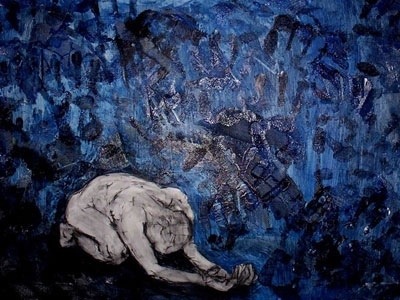
IT’S STILL WORTH IT

20140608-174356-63836468.jpg

My wife and I are bereaved parents of a 24-year old son we buried nearly six months ago. In the wake of our beautiful ache, we both maintain the indicatives of this and my prior post. God remains good even in this, and it’s still worth any trial we must go through if we can but know Jesus more fully and intimately. Selah.

_____________________________________________

My previous post (hopefully) encouraged the saints that in whatever circumstance of suffering or degree of disappointment, hardship, brokenness and despair you may find yourself in, IT’S STILL TRUE:

God is eternally Good to His own,

and is fiercely jealous of His own,

and eternally protective of His own.

That is unassailable Truth.

20140607-203447-74087566.jpg

Now I’d like to take it to the next level (as if there could be a higher level!) and leave you with this pinnacled truth: whatever bad business you’ve endured or are enduring, whatever mischief of hell cast against you, because of His promises, IT’S STILL WORTH IT!

(1) Because of His nature to love and guard His own, IT’S STILL TRUE: He is good.

(2) Because of the promises He folds into His new creation, IT’S STILL WORTH IT: I can go on. I won’t give up.

I can be strong in my trial because there is One who fights for me, wins my battles and makes me a (constant) overcomer in this life. I can endure because He will make my suffering worthwhile in an eternity bedecked with glories everlasting.

_______________________________________________

IF GOD BE FOR US, WHO OR WHAT CAN BE AGAINST US?

____________________________________________________________

Steven Curtis Chapman sang a bold anthem, “Bring It On” and a year later, his son backed their car over their newly adopted little girl.

Bring it on
Let the trouble come, let the hard rain fall
Let it make me strong
Bring it on

Now, maybe you’re thinkin’ I’m crazy
And maybe I need to explain some things
‘Cause I know I’ve got an enemy waiting
Who wants to bring me pain

But what he never seems to remember
What he means for evil, God works for good
So I will not retreat or surrender

Bring it on
Let the lightning flash, let the thunder roll
Let the storm winds blow!

Now…I’m not advocating our throwing down the gauntlet and taunting the adversary but there is a blessed promise that we can boastfully claim. Nothing – absolutely NOTHING – the enemy brings against us will overcome and destroy us.

What does the intrinsic force of verse 31 do for you???

_________________________________________________

Paul said it minimizes his trials. What they work FOR HIM is great and glorious, but what they do TO HIM is minimal compared to the greater work. Rom 8:18.

_______________________________________________________

― C.S. Lewis, in Mere Christianity, illuminated this truth in an imaginative way:

“Imagine yourself as a living house. God comes in to rebuild that house. At first, perhaps, you can understand what He is doing. He is getting the drains right and stopping the leaks in the roof and so on; you knew that those jobs needed doing and so you are not surprised. But presently He starts knocking the house about in a way that hurts abominably and does not seem to make any sense. What on earth is He up to? The explanation is that He is building quite a different house from the one you thought of – throwing out a new wing here, putting on an extra floor there, running up towers, making courtyards. You thought you were being made into a decent little cottage: but He is building a palace. He intends to come and live in it Himself.”

But please take note:

It is not suffering itself, but my voluntary acceptance, submission and praise of it. To come under it, be trained by it (see Heb 12:11) that produces greater glory within.

Rom 8:17 gives further light. Not just any suffering, but suffering “with Him.”

“But if we are children, we are also heirs. We are God’s heirs and fellow heirs with Christ, if we really suffer with him so that we can also be glorified with him.” CEB

To VOLUNTARY ENDURE suffering is proof that we belong to the Age to Come…it is the hostility of THIS age that works against us (and is the doorway into future glory!).

But, look – LOOK! – saints, at the glorious promises that make our renovations, remodels, additions and painful constructions worth it!

(1) Our REVEAL as eternal sons and daughters (v19)

Creation – sun, stars, mountains, oceans, beasts of the field, fish of the sea, birds of the air, trees and flowers in the fields, the sunrise and sunset – even angels! – all wait with eager expectation for the revealing of the sons of God. For our wedding day to the Son, for God Himself to make His Home in His people.

Creation was not designed to frustrate man, but to serve him and reflect his glory. Gardens were to produce fruits not weeds, the animal kingdom was not fearsome to man, but friendly; his body was free from disease and sickness, the night was not terror-filled and the climate was calm and favorable.

In the curse, creation was subjected to decay and corruption and not friendly dispositioned to man but rebellious. But this is not the DNA of nature and creation. It knows it’s under bondage and will remain so until the saints are glorified.

If you’ve wondered at the aggression of climate and nature you only have to know these point to the increasing of birth pangs as creation’s convulsions are getting closer together in anticipation of the revealing of the sons.

(2) Renewed PURPOSE (v20)

“Futility” translates ματαιοτησ,
‘nothingness’, ‘pointless’ and ‘worthless because so twisted and faulty’

Man was made in God’s image but through the Fall and Death, perpetuated Adam’s image (Gen 5:3). Through new birth, we are again bearers of the image of God! No longer pointless, worthless, vessels of destruction, but with glorious new purpose and destiny!
__________________________

I am moved by the words of Sara Groves in her song “Why It Matters”. The lyrics were inspired by Vedran Smajlović, a former cellist in the Sarajevo String Quartet.

During the Siege of Sarajevo, he played his cello in the bombed out buildings and on the streets where mortars had killed his neighbors and friends. He called this “a protest of the darkness” and spoke of his cello as a weapon.

Like the statue in the park
Of this war-torn town
And it’s protest of the darkness
And the chaos all around
With its beauty,
how it matters,

How it matters.

________________________________

The redemptive work of our own suffering is a “protest” against darkness, letting in light to those around who are lost and blind and shielded from Truth. I posit there’s no greater evangelical “tool” than for the unsaved to encounter a saintly broken vessel that lets the Light of Christ shine into the darkness!

(3) Infectious HOPE for the earth’s redemption (vv20b-22)

The Greek for corruption is the opposite of ζωη αιωνιοσ (eternal life). So we should relish the pains of our redemption – the “gospel of weakness” – because they are the merits that point to a glorious rebirth for the earth!

(4) the REMOVAL of every last curse of the Fall against us, taking us into eternal life – THE life, unended, that we were created for way back in Genesis 1 and 2 (see Rom 8:23)

Revelation alert:

Have you seen that Romans 8 is taking us back to our intended purpose: no condemnation, adopted sons, glory, a submitted creation, reigning in Life with the Father, uninterrupted fellowship, conquering and ruling?

What we have access to, what Adam and Eve could not partake in, is the Tree of Life. They had innocence conditionally – so long as they didn’t eat off the wrong tree of self-rule, but we have His Life permanently within.

Their judgment shut them away from the Tree of Life.

Our salvation has His Tree-Life growing in us!

So, to wrap up:

It’s worth it because:

(1) I’m assured of Finished Glory – that my future state will be as the Glory of the sun, moon and stars in Glory

(2) I have a purpose that is eternal – a unique role I’m called to perform throughout eternity, that only I can do, and that will add Glory to the Godhead

(3) A glorious environment is being prepared for me.

(In Genesis, the environment was first prepared, but in the New Creation, God prepares His Man and Woman, then prepares a place worthy of the Glory they’ll share with the Son!)

(4) The Joy and Glory of Eternity is endless and exponential – that the afflictions of this lifetime will determine the affluence of my eternity and the pains I endure here will reciprocate to pleasures compounded daily for eternity

Say it with me:

It’s worth it.

I can go on.

I will go on.

By grace.

Through faith.

In victory.

And a song.

For His glory.

Amen and amen.
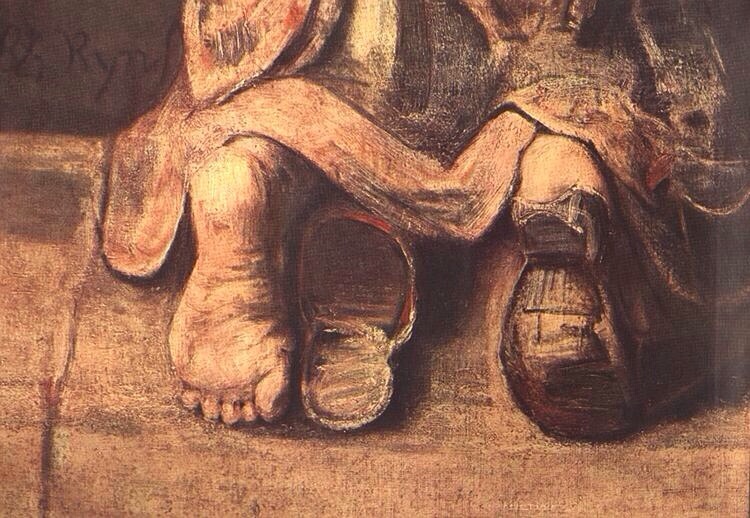
Praying Your Prodigal Home

20140309-210916.jpg

In light of my most recent posts, I thought it might be beneficial to re-share this from not so very long ago. While there’s some age to this material, no doubt its insights and encouragement are timeless. I pray it will be as meaningful to you as it has been to Sandy and me. Our prayers are with you as you wait on the front doorstep for your miracle.

Peace.

HOW I LEARNED TO PRAY FOR THE LOST

“This is the result of my search for the right way of praying for the unsaved. I have found it to produce amazing results in a very short time.

After more than 20 years of fruitless praying, it seemed that there was no possible chance for my loved ones to ever return to the faith. But after only a few weeks of the type of praying that I have outlined here, I have seen them studying the Bible by the hour and attending every church service possible. Also, their whole attitude toward Christianity has changed, and all resistance seems to be gone.

I have taken my place of authority in Christ and am using it against enemy. I have not looked at myself to see if I am fit or not; I have just taken my place of authority in Christ and have prayed that the Holy Spirit may do His convicting work. If each and every member of the Body of Christ would do this, what a change would be made in this world!

Believers everywhere are burdened for the unsaved or backsliding loved ones. However, many are praying in the spirit of fear and worry instead of faith.

This has caused me to seek for definite light on how to pray, feeling the need of praying the right prayer and also the need for a definite promise or word from God on which to base my faith when praying for the unsaved. Praise God — He never fails to give such needed help!

Perhaps because the salvation of some seemed to be an impossibility, the first verse of scripture that was given to me was Mark 10:27 – “With God all things are possible.”

The next scripture verse had occupied my attention for some time, but it took on a new meaning: “(For the weapons of our warfare are not carnal, but mighty through God to the pulling down of strong holds;) casting down imaginations [speculations] and every high thing that exalteth itself against the knowledge of God and bringing into captivity every thought to the obedience of Christ” (2 Cor. 10:4,5). This shows the mighty power of our spiritual weapons. We must pray that all this will be accomplished in the ones for whom we are concerned; that is, that the works of the enemy will be torn down.

Finally, I was given the solid foundation for my prayers — the basis of redemption. In reality, Christ’s redemption purchased all mankind, so that we may say that each one is actually God’s purchased possession, although he is still held by the enemy. We must, through the prayer of faith, claim and take for God in the name of the Lord Jesus that which is rightfully His. This can be done only on the basis of redemption. This is not meant to imply that, because all persons have been purchased by God through redemption, they are automatically saved. They must believe and accept the Gospel for themselves; our intercession enables them to do this.

To pray in the name of the Lord Jesus is to ask for, or to claim, the things which the blood of Christ has secured. Therefore, each individual for whom prayer is made should be claimed by name as God’s purchased possession, in the name of the Lord Jesus and on the basis of His shed blood.

We should claim the tearing down of all the works of satan, such as false doctrine, unbelief, atheistic teaching and hatred, which the enemy may have built up in their thinking. We must pray that their very thoughts will be brought into captivity to the obedience of Christ.

With the authority of the name of the Lord Jesus, we must claim their deliverance from the power and persuasion of the evil one and from the love of the world and the lust of the flesh. We should also pray that their conscience may be convicted, that they may listen and believe as they hear or read the Word of God. Our prayer must be that God’s will and purposes may be accomplished in and through them.

Intercession must be persistent — not to persuade God, for redemption is by God, but because of the enemy. Our prayer and resistance are against the enemy — the awful powers and rulers of darkness. It is our duty before God to fight for the souls for whom Christ died. Just as some must preach to them the good news of redemption, others must fight the powers of darkness on their behalf through prayer. Satan yields only what and when he must, and he renews his attacks in subtle ways. Therefore, prayer must be definite and persistent, even long after definite results are seen. And we must pray for the new Christian even after he begins to be established in the faith.

We will find that as we pray, the Holy Spirit will give new directions. At one time I was interceding for a soul and began to feel that my prayers were largely ineffective. Then the Holy Spirit inspired me to begin presenting that person to God in the name of the Lord Jesus. As I obeyed this leading, praying, ‘I present so-and-so to God in the name of the Lord Jesus,’ I felt that my prayers were gradually becoming more effective. It seemed that I was drawing that person from deep within the very camp of the enemy. Then I was able to proceed as usual, claiming every detail of that life for God, using the power of the blood against the enemy. This is true warfare in the spiritual realm. Thank God that our spiritual weapons are mighty and that our authority in Christ is far above all the authority of the rulers, powers and forces of darkness, so that the Enemy must yield. But it takes faith and patience and persistence.

Missionaries on foreign and home fields can resist the enemy in their districts, communities and schools by using the power of the blood of Jesus against the powers of darkness, sin and unbelief. With the authority of the name of the Lord Jesus they can demand the enemy retreat. Note that ‘it is the spirit that quickeneth the flesh profiteth nothing’ (John 6:63) and that ‘the letter killeth, but the spirit giveth life’ (II Cor. 3:6). Therefore, we must constantly seek the motivation of the Holy Spirit in our hearts, in our faith, in our prayer and in our testimony. It is most important also that we confess our own sins and have them forgiven.

The enemy will use every possible means to silence our intercession and to block our attack against him. We must not only understand our enemy, our authority in Christ and how to use our spiritual weapons but also how to wear the armor that God has provided for our protection. Thus equipped and protected, we need not have any fear. But let us always remember that we have no power and no authority other than that of Christ.

‘Now thanks be unto God, which always causeth us to triumph in Christ’ (II Cor. 2:14)

‘Greater is He that is in you, than he that is in the world’ (I John 4:4)

— L.M.
(The writer has asked her name be withheld)

_____________________________________

A final note. Our heartfelt thanks to Carey Childrey, a long-time friend and mentor, for sharing a copy of this marvelous message with us. Within weeks of posting this – knowing others needed its encouragement also – the Father ran to meet our own prodigal and welcomed him Home.

Can’t wait to share in the fatted calf with you, son.

Good Grief

20131228-183137.jpg

Copyright © Tayfun Eker. All rights reserved.

On December 16, our only child, a son, left this earth and found his place at Jesus’ table. Graham’s passing was unexpected and sorely painful, but Sandy and I are finding, in the mess, the beautiful handprint of God. I’m attempting to write in the rawness of this near-season, because that’s how I process. Please forgive any puzzling sentiments; this is brand-new territory. And be patient with me; this may be the first of several postings.

<

________________________________________________________

Burying your child bites.

At any age.

And Christmas, no less.

If it wasn’t so sad, it’d seem almost ‘made-for-Lifetime-tv’ cliche.

An empty stocking. A poignant absence. A cask of memories stoppered, it’s aroma sealed off so that only the fragrance left over could be imbibed. It’s tough sledding.

Yesterday I returned two books to the library for my bride. The sweet girl with the kewpie doll voice asked about our holidays. I paused a couple of ticks, then lied.

It was great, etc., etc., family in town, etc., great food, laughs, etc., etc….

Her co-worker overheard and added, ” oh that’s good; mine was the best in memory.”

I bowed and took my leave. I could’ve sucked the air out of the atmosphere right then with a story made for Kleenex, but what possible end would that achieve? I wheeled toward the exit, smiling, and kept our library a tissue-free zone.

My next stop was the neighborhood hair cuttery. What the heck, I thought. It happened. I can’t hide it forever. So when the smiling girl behind the counter asked my phone number, I knew her screen would pull up two names, mine and my boy’s.

“Are you Scott?”

“That’s me,” I said cheerily enough. A few clacking noises of fingernails on keyboard, then, I took a breath and took my chance.

“You can remove Graham’s name.”

I did it. I requested the erasure of my son’s memory from their hard drive.

She laughed, probably a little too loudly for anyone’s comfort. “Remove it?” she half-smiled, but now seemed momentarily puzzled.

“Yeah, go ahead and take it out.”

In retrospect, I’m pretty sure she thought I was being facetious?

Because now she smiled a full-white-teeth smile.

“I know its morbid,” I continued, “but he’s no longer with us…”

What happened next caught me off-guard.

“Okay, Mr. Mitchell, right this way…”

She never even acknowledged what I said. I followed her to her station and parked in front of her mirror where I saw the reflection of a dad who had just lost his son, laid his body to rest, and would never know the feel of grandkids bouncing on his paralyzed lap. In ten minutes, the insipid business of clippers on head and hair on floor was over; I paid, tipped generously, and quietly removed myself from the premises, already on to the next jejune errand. Sigh. Life goes on.

Good grief.

Tonight, as I compose these thoughts, I’m surrounded by the din of small talk and redolent aroma of coffee in a bookstore cafe. No one here knows me, thankfully, or what I’ve just been through. I find the juxtaposition of conflicted feelings has got me all Sybil-ed out. On the one hand, I’m safe in my nest of anonymity. On the inexplicable other, I want to tap on my cardboard cup with my plastic spoon and announce to the room I’m grieving. I somehow think if I did that, a few might be mildly irritated by the interruption, some would be confusedly alarmed and others might smile, nod in deference, then return to their paused-on paragraphs, none the wiser.

Who would it help? No one, most of all me.

I easily relent.

It’s been almost two weeks removed from “the call” (next post) and the suddenly-childless couple are braving the public. We want to, yes, need to, get out, but we’re not yet ripe for frivolity.

The day after laying our son’s body in a scar in the earth and paying our soulful respects, someone wanted us to leave all that weight and grief behind and let Madea turn our mourning into dancing with them. Completely understandable. But nowhere near our radar.

There is a sort of invisible blanket between the world and me. I find it hard to take in what anyone says. Or perhaps, hard to want to take it in. It is so uninteresting. Yet I want the others to be about me. I dread the moments when the house is empty. If only they would talk to one another and not to me.”
― C.S. Lewis, A Grief Observed

Amen, Clive. I so get you.

It’s hard to be on Facebook these days. For all its good, it can be painfully obtrusive or, even worse, obtuse. Aloof. People’s lives (rightfully) have already moved on past our momentary grief. We’re just not that interested in friends’ parties, get-togethers, selfies and animal snaps. But I too have been the unaware perpetrator of similar ‘crimes’ against others’ sorrow. Sitting here atop my own ash heap of dirge, I’m acutely aware of it.

We’ll move on, yes, but grief is, paradoxically, healing.

So we’ll heal here in the warm bath of hurt.


And praise Him in the pile.

On the day I knew of my son’s departure from this hard earth, I was visited by a friend. He came to the house, drew a chair close beside my own in the dining room and wept there with me, wordlessly, for fifteen minutes. Tears didn’t run down his cheeks, they flung outwardly to the floor. After he hugged me and held my hand, he prayed a few-second prayer, hugged me again then left. I still talk about that visit. There was no Romans 8:28, though it’s no less true. No counsel, though we welcome words of life into our soul. No bumper sticker theology. No tweets. No platitudes. Just grief. Good grief.

We’ll be okay.

We are okay.

We’ve been prepared for this. God has made us ready. And when our Father requires us to redeem our suffering by entering into the suffering of another – which He will – we’ll most gladly tell of His good deeds, gracious intentions, expert wisdom and unfailing love – without words, if we have to; with simply being present; with silent sobbing; with resurrection hope; with His authority, because of a new degree added to our schooling.

On the night before Graham’s funeral I wrestled with my responsibility to share something. The people need to hear from us. I didn’t want my silence to be translated into depression or hopeless grief. The pastor in me wanted to explain, expound, exposit and exhort. The encourager in me wanted to encourage the many who came with question marks. It turns out, my pastor friend handled it with all the eloquence and grace I pined for. He was magnificent.

I, on the other hand, listened to my wife who said, “it’s okay for us to grieve, Scott. Just for today, would you be a Dad instead of a minister?”

Yes, my love. Yes, a million times over!

I like Dad mode. Who says it’s supposed to be over?

Her (Not-So) Secret Garden

20131023-114531.jpg

I have an unsettling statistic to share with you. At present, in our country, there are 3,000,000 ongoing cases of child molestation. That means, while you are reading this, three million children aged 13 and below are being victimized by sexual predators. These are only the cases we know about, so that figure is likely a very conservative estimate. Today, Nearly 40 million adults bear the scars of sexual abuse in their younger years at the hands of strangers, caregivers, parents, siblings and clergy. Mostly at the hands of people they know quite well.

Even in the safest place a child should know – a Christian home.

The beautiful young woman who wrote this hauntingly beautiful piece is a friend. “Jane” (a pseudonym of her choosing) was sexually molested by a family member and has courageously agreed to share her story with you. My wife and I have known her – from afar – for better than twenty years and, like so many situations like these, would never have guessed this was her story.

This may be one of the most moving – and important – posts to ever appear on Green P@stures. Jane’s story may be equal parts ugly while gorgeously and tenderly written, but it brings into the light the issue that the protected secret of sexual criminal activity – of all types – in the church and in Christian homes must be addressed.

Jane is an overcomer. Questions linger, yes, and scars remain, most certainly, but she has been brought into the safe pasture of Christ and has known His healing grace intimately and has even found the ground to worship Him in the “garden of her heart.”

Thank you, Jane. Your life is beautiful.
_________________________________________

“Close your eyes and imagine your heart is a garden….What does it look like?… What shape is it?… What is growing in it?…And where is Jesus in it?”

The first time someone asked me that, during a time of prayer, I imagined something very like the walled garden in Francis Hodgson Burnett’s classic novel, The Secret Garden. A beautiful garden full of rose vines, with trees and an abundance of flowers near overgrown in a tangled beauty. Walls covered in ivy. A hidden place, open to the sun and sky but protected and safe. It even included the small, dark, abandoned cottage in Burnett’s garden, barely noticeable in the riot of rose vines. And Jesus was a Dickon-like figure, helping me tend the garden.

That this garden is how I would imagine my heart when prompted hardly surprised me. The Secret Garden was a favorite among the many books I fled to live in as a child when life became unbearable. When my step-father, the new daddy I’d prayed for, turned out to be a nightmare.

Who expects a respected church leader and Bible college student to be a child molester?

No one, it turns out. Certainly not the eight-year-old me who couldn’t even begin to comprehend or understand what was happening.

I knew my family loved me. I knew Jesus loved me. I knew everything that happened was part of God’s plan.

And I knew about God’s plan. I’d spent all of my life in church and Sunday school and Christian school, and I’d learned about God’s plan in the Bible. How all the amazing “coincidences” in the Old Testament story weren’t coincidences at all, but were God carefully working out his plan. And how even more so, all the “coincidences” around Jesus’ birth and life were as intentional as the most carefully written story.

Even the horror of the crucifixion was part of God’s plan.

So what was I to think of the horror of this plan? For part of the plan this too had to be, since nothing could happen outside God’s plan. It simply was, and I couldn’t understand it or avoid it, only try to endure it. To find a way to live with it.

And I did. For too many years. I lived with it by fleeing into books, stories that offered friendship and love, adventure and wonder, difficulties and sorrows but always hope. I lost myself in other lives – many of them happy, many as difficult and troubled as that of Mary Lennox, but all of them definitively other.

My life – the reality of it – had not only become unlivable, it had become invisible. No one saw, so no one helped.

But God saw. I knew that, too. God saw everything.

And God didn’t help.

Somehow I never questioned that he loved me.

God loved me, and he didn’t help me.

So being loved by God stopped being safe before it had even occurred to me that it should be. Being loved by God stopped being something I could enjoy without me even realizing it. Years later when a friend mentioned in passing that we enjoy being loved by God, the whole thing felt utterly alien to me.

What do you do with hopelessness when it becomes just the stuff of life when you’re eight years old?

And yet God was there – in Sunday school and church, in songs and scripture, in the vivid prayer conversation I’d had with him for as long as I could remember.

But he wasn’t there.

In the nightmare, he wasn’t there. In his place was only stillness and silence and preachers quoting Romans 8:28.

I couldn’t bear to look at where the God who loves me wasn’t, so I just didn’t go there.

I was too young to be thrust into the heart of the problem of evil. (We are always too young.)

It wasn’t until God remade the garden of my heart that I realized that first vision was more than just a familiar and beloved image from a favorite childhood book.

It was indeed a place of great beauty – beauty that reflected all that God had made me and all he made me to be. But it was also a place of walls rather than freedom.

Jesus was indeed there, helping me learn to care for all the life and beauty, but that small, dark, nearly hidden cottage (the one that isn’t actually in the book, though I remembered it there) – that was the place of God’s absence, of God’s silence, that I just avoided looking at much less approaching.

When God remade the garden of my heart, it was in another vision during another time of prayer. This time, the vision came without a prompting. It came instead with daring to remember.

The particulars of what happened in my childhood were never something I couldn’t remember. Instead those memories were packed away in a shoebox in the back of the closet of my mind. I knew exactly where that box was, and was careful to avoid it – careful to avoid the torrent of overwhelming and unbearable feelings (and realities) that came with those memories.

But this time, in prayer, I was asked to remember, and in fear and trembling I did.

I found myself trapped in the most primal darkness, stuck so deep in the thickest and most despairing of swamps, entangled in the harshest of briers and vines.

Drowning in helplessness and hopelessness and despair.

And in a sudden instance I felt myself grabbed by Jesus and yanked out of the darkness and stuckness and thrust out into the vastness and brightness of a sunny mountain meadow surrounded by distant peaks. And I ran free through that sunbright meadow straight to a brightly lit house in its middle and into the utter safety of my Father’s arms.

I understood that this was the garden of my heart now – still filled with the beauty of creation, but the walls had been replaced by the freedom of endless adventure; the small, dark, nearly hidden cottage with the bright mountain cottage that was the home my Father had made for himself in my heart (though I knew somehow that home contained it all); and somehow, all that had to be avoided was replaced with the utter safety of his embrace.

The questions were all still there and all still important, but they couldn’t get in the way anymore. They couldn’t come between me and the safety and joy of being loved by my Abba.

And it is in his arms of love, in that house filled with light, in that sunbright meadow, in those wonderfully wild mountains that I ask those questions now and wrestle with answers – and the lack of them.

I don’t believe the nightmare was part of his plan anymore, because this is his plan and was all along. And all that darkness could do to rip me out of it was defeated on the cross. This is the victory won there – when the God who is love came and absorbed the force of all the violence and evil this world had to throw at him, and then got up and walked away unchanged – resurrected and still the God who is love.

I don’t believe the nightmare was part of his plan because God is not the author of evil.

He is the victor over it – he is love, life, and light.

It is only because he never stops thinking about us that any of us exist, move, and have our being. And even when we suffer or commit the gravest evil, he never stops thinking about us – loving us. That’s who he is.

We are still free to ignore his plan. To do the many things we do that have nothing to do with who he is or who he intends us to be.

God does have a plan, and he will accomplish that plan. I’m just not sure any more that plan has a lot do with all we credit it with. I’m not sure God does much interfering in the things we (or others) choose.

I don’t think he’s constructing history to meet his ends. Because I believe he already has his ends. And from that place of victory he calls us toward him, in the middle of the mess of this world – through the mess of this world and into his victory that is leaking into it.

Most of the questions I live with still aren’t answered, and the questions and the mess only seem to multiply daily. I’ve come to doubt that answers exist, or if they do, if they’re the point at all (though I can’t seem to break the habit of looking for them).

Sometimes we can try so hard to find meaning in the meaningless that we miss the pain in the painful – the reality of how far things are from the way they are supposed to be.

What I’m beginning to learn to look for, though, is the victory in the middle of the mess. That’s where Jesus is.

__________________________________________

Endnote: if this story is yours and you need to talk to someone – even Jane – we can help you find the help you need.

God’s Job

20131016-193221.jpg

“Are you still holding to your God?” she blurted.

The question, so venomously delivered, floored him both in its substance and tenor.

A pause. A pestering fly buzzed and lit, and with a grotesquely misshapen hand, like the rest of him, he swatted at it and instantly recoiled as the motion shot pain traveling down the bone of his boil-covered forearm.

His wife’s dark-chocolate eyes were a mix of pity, disgust and desperation and they held onto his own in unapologetic defiance.

Then, over lips cracked and oozing from painful blisters, were dislodged a brief salvo of words, measured but molten nonetheless, meant not to injure but correct.

“Woman!”

A wracking cough.

“Wife!” he chuffed, liquid pooling in his eyes, “even in the whirlwind He is still God!”

She opened her mouth as though to protest but no words could be conjured. Instead, she balled her fists until they were whitened from blood-loss, the skin over the knuckles stretched as tautly as they dare, and she swung them downward in a violent arc as she collapsed on folded legs. She landed with such force her knees were bloodied by bits of rock and force and, simultaneously, a cloud of dust went up as the sides of her fists pummeled that sad patch of earth again and again.

Her husband reached for her imploringly, but every movement spilled fire throughout his ravaged body. As he stooped lower to the ground more pustules opened along his spine causing milky fluid to spurt and run then coagulate with other rivulets of ooze. No position was comfortable, no shift in posture without serious repercussions. Some boils had burst and the viscous discharge began to dry-cake over large sections of his body, yet still he struggled to kneel beside the love of his heart. By then her face held a layer of chalky dust, through which the streaks of tears etched pitiful lines across and around her sallow cheeks.

Down there, in the ash, beside his wife, the broken man cried silently. Aside from the Great Cosmic Truth, he had no answers for their recent downturn of events and his pulverized soul was dying by degrees.

A horrifically Perfect Storm had converged on husband and wife in a single day and changed them forever. No inner resource imaginable could be summoned to counteract the briny poison they tasted as they helped each other up from wobbly knees. In a still-recent scene, both pairs of red-rimmed eyes willed the freshly dug graves to suddenly, somehow tremble and their ten resurrected children break through the tender, packed soil.

If only…

And not just their offspring but most of their household as well, silenced by marauding terrorists, their souls cut off with unspoken words henceforth trapped in their throats. In the melee of catastrophe, all was lost: household, livestock, wealth – their very subsistence! – ripped from their clutches! All that remained were fields of blood, the flotsam of tragedy, plumes of hellish smoke, ashes of heartache. The aftermath. And all this in a single day.

That was yesterday.

In the early morning of a sleepless night, a veil of unnatural blackness passed over the piteous man’s body and his skin prickled as fear squeezed his spirit.

What’s this — ?

The chill quickly gave way to a blazing fever that produced head-splitting pyrotechnics of fire and lightning. Instantly, his hands went to his head and the stultifying discovery of even more rising boils, these more monstrous than what earlier plagued him. In the light of a revived oil lamp he was literally watching as blister after blister began bubbling all up and down his arms. He clawed at his nightshirt as the pus-filled eruptions spread across his torso and brought multiplied agonies.

Oh, my God in heaven — !

By the first rays of dawn, there was not a single inch of his body that was not ravaged by festering boils. From crown to sole, he was tormented. Terrors invaded his mind and he knew only death could bring relief but death was obstinately elusive. Tortured to the point of wracking sobs of which he had no control, he sought comfort from the only human touch available, but she was closed in by her own grief.

Incredulous that her husband would persist in persistent worship of the One she held responsible, ire burned deep within, tempered only by despair and guilt. At one point, holding rags of gelatinous blood from her helpmate’s sores, she shut down completely and removed herself from the stink of the room and sloughed heavy-heeled out into the stale, rancid air, each step taking her lower to the ground until her body fell in a heap twenty paces from the front fold of their tent. She lay there, in the dirt, motionless.

The candle of her once-bright spirit had flickered out; all life, save the doleful beating of her heart, had begun its slow, mournful descent into hades.

A single slit of light from the tent-fold shone like a thin, glowing sword on the floor as the broken man gathered himself for the silent pilgrimage where his unsightliness and suffering would be shielded from view and his groanings well out of ear-shot. Yard by agonizing mile he shuffled and struggled, distancing himself from his wife who lay face-down, crumpled in suspended shock, arms stretched and hands clawing at the ash.

At the outer edge of all that was once familiar and pastoral, on the outskirts of the main settlement, were the dumping grounds, where a pit of fire burned refuse day and night.

Here, he could wail.

Here, he could formulate his arguments.

Here, he could make his final altar to his God, whom he clung to for dear life and, if necessary, to its bitterest end.

As the sun baptized itself beneath the craggy horizon, a pitiful silhouetted figure of a patriarch, a dark smudge against the monochromed dusk, bowed atop a heap of ash and worshipped Elohim with the music of broken shards of discarded refuse scraping against his diseased flesh, taking great care not to curse deity with his blistered lips.

And thus it is that this greatly suffering servant of Elohim soon discovers his great value to the Almighty and wealth that has little to do with ledgers and portfolios.

Days?

Weeks?

Longer? (Who knows?)

Months? Probably not months. The Trial of Yob was underway and his Character Witness had not shown up to take the stand on the defendant’s behalf. There was, however, a team of deftly-trained prosecutors who postured themselves on the opposite side, tilting the courtroom floor on the wizened merits of their own arguments. Back and forth it went, each round-robin of questioning getting more and more aggressive and viciously personal, but the lone man Yob maddeningly (for them) deflected each diatribe and proudly held his ash-laden ground.

How obscene that a man of such inarguable distinction should suffer such relentless and ignominious persecution and proverbial salt-rubbing! How unkind their condescensions! Was there no end to their delusions that they would be hand-picked by the Almighty to protect the honor of His Name?

While these self-promoting sages wrestled their opponent with predictable wisdom and quasi-rational rhetoric, the beaten-down man sought audience with Higher Counsel and Transcendent Revelation, so, at times, the gallery (you and I) catch him in a different dimension almost, the dronings of The Three becoming a collective mist dissipating against the rising warmth of Yob’s impassioned appeals to a Majestic-Though-Silent Cosmic Court.

“I cannot see You!” he barks to the heavens, “but I know You can see me!”

A couple of flies strafed the pitiful patriarch, who had barely enough strength to swat them away anymore, by which they lit again and again, having no decency to stay away from the victimized man. Yob’s red-rimmed eyes lowered in resignation. He sighed.

Then, marvelously and mysteriously, his slumping head raised again as he sucked in a half-lungful of steamy air. Summoning strength he did not have and, with lowered voice, formed his next words with great care.

“And I know this…”

A series of choking coughs.

“…I know…”

Another brittle, cracked cough.

“…He knows I will come through this…”

A corresponding, but very weak wave of a ruined arm.

“…like…like…”

A spasm of pain, drawing a deeply pained expression.

“…like…gold.”