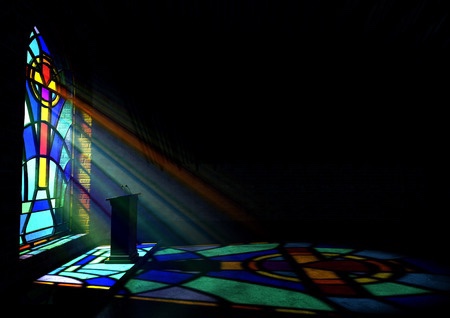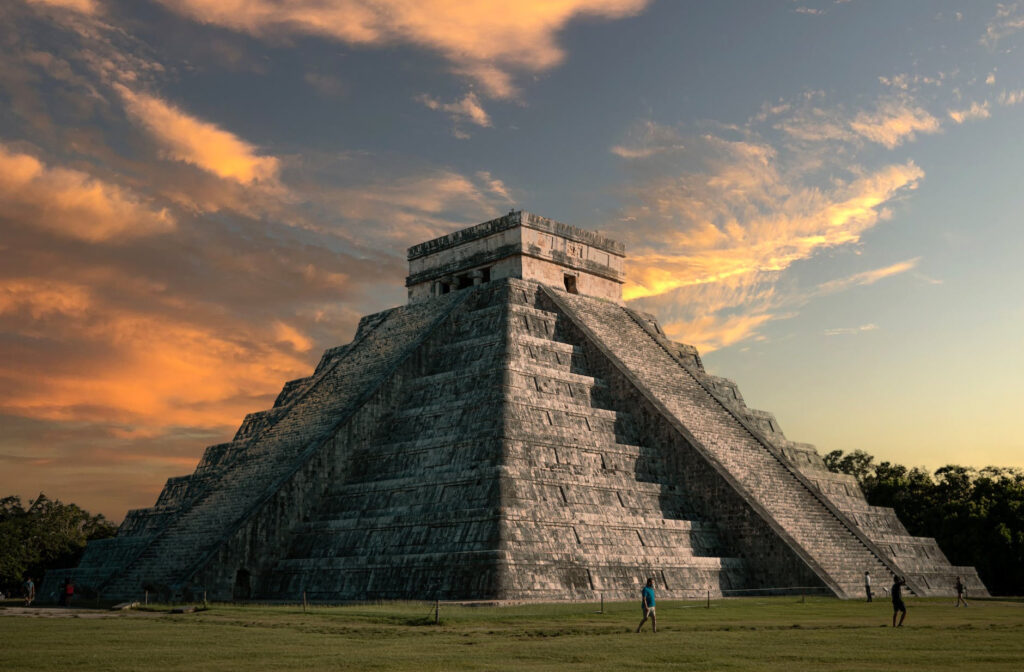
ziggaruts and arrows


“Come, let’s build ourselves a city and a tower with its top in the heavens so that we may make a name for ourselves…”

Genesis 11:4


We’ve long believed the people of Genesis 11 wanted to build a tower for themselves to scale the heavens, but that wasn’t it. The Tower of Babel was a ‘stage’ for their god to come down and visit them. Such towers, or ‘ziggurats,’ sat atop temples, providing their god(s) a ‘landing pad’ on which they could descend in grand style.

Trouble was, these were Mesopotamians; they certainly weren’t ‘YHWH’ people. The builders in the text longed for false gods with phony promises. In a similar story the prophets of Ba’al tried to upstage Elijah’s God by building theirs a runway. But guess who didn’t land? Although they wailed and hollered and chanted until they were blue in the face Ba’al never showed up (1 Kings 18:20-29).

Vanity of vanities, these worshipers of Marduk or Inanna or Anu, or whichever gods they could coerce to visit (‘build it and they will come’???), thought a skyscraper might get their attention. Alas, no.

Annnnnnd we keep building our towers. And they keep failing us. Careers, ideologies, reputations, portfolios, fantasies. Towers. Rubble. The Titanic was thought unsinkable. No less than a dozen utopian experiments have failed. Voltaire said within a hundred years of his death Bibles would be obsolete. One hundred years later, Bibles were being published in mass out of his home.

name above all names

A word about the phrase “make a name for ourselves” (Gen 11:4). In ancient thought it meant to create a ‘legacy.’ These ziggurat-builders wanted something lasting for their children and their children’s children. Nothing wrong with that, right?

Even us modern folk can justify our ambitions to be for the good of our children and our species. But in all our construction are we ignoring the Chief Cornerstone? Do our kids see us representing the Name above all names or is our handprint all they can see?

These Mesopotamians hoped to erect a Shining City on a Hill for their race. Trouble was, it was the WRONG CITY. There’s a reason we call it the Tower of Babel. Babel is about empire-building and man-exalting.

The gospel reverses all that. God wants to build a house, a CITY, a nation for US, for his people. We have nothing to offer him but ourselves in worship of his majesty.


Now I saw no temple in the city, because the Lord God—the All-Powerful —and the Lamb are its temple. The city does not need the sun or the moon to shine on it, because the glory of God lights it up, and its lamp is the Lamb. The nations will walk by its light and the kings of the earth will bring their grandeur into it. Its gates will never be closed during the day (and there will be no night there). They will bring the grandeur and the wealth of the nations into it, but nothing ritually unclean will ever enter into it, nor anyone who does what is detestable or practices falsehood, but only those whose names are written in the Lamb’s book of life.

Revelation 21:22-27

We live for the glory of the King. We are not here to build a legacy, much less “a name” for ourselves. Rich Mullins, the prophet-minstrel reckoned himself “an arrow pointing to heaven.” He said,

“If my life is motivated by ambition to leave a legacy, what I’ll probably leave as a legacy is ambition. But if my life is motivated by the power of the Spirit in me—if I live with the awareness of the indwelling Christ, if I allow his presence to guide my actions, to guide my motives, those sorts of things. . . . That’s the only time I think we really leave a great legacy.”

— Rich Mullins

That’s our legacy, too. We are ziggurats made of clay (2 Cor 4:7), “tent-temples” groaning for our release from this world that we might enter his.

Shinar people, to their great misfortune, set their aim for earth and got nothing out of the deal. No personal deity, no lasting city, no enduring legacy.

a ‘ziggurat’ named abram

In the very next chapter, lo and behold, there was a visit from Deity! The Supreme God found a landing pad in a nobody named Abram and said I want to make your name great for My glory. God had plans to give him a people, a City, a nation, and himself!

Now that’s a legacy!

Father Abraham looked out his tent one day and saw what God was up to. He witnessed in a billion points of shimmering light a family of arrows each pointing to and worshiping the Almighty.

Like him, let us live out our days “looking forward to that City with solid foundations of which God himself is both architect and builder” (Heb 11:10). Ziggurats of Zion. Arrows until eternity.

Selah, fellow arrows. Until the Day!
make it make sense, lord


I call out to you, “Violence!”
But you do not deliver!

Habakkuk 1:2


Two Fridays ago was meant to be when 9-year old Evelyn Dieckhaus was to sing “What a Wonderful World” in a play at her Nashville school. Instead, her life was cut short by a bullet from an AR-15 carried by a young woman with a demonic grudge.

A bullied thirteen year old Indiana boy recently ended his life. Before committing suicide he left a video in which he named his tormentors. They made fun of his size, his haircut, and his clothes. The seventh grader dreamed of playing for the St. Louis Cardinals someday. Tragically, all he leaves behind is a void.


Why do you force me to witness injustice?
Why do you put up with wrongdoing?

Habakkuk 1:3


In the Netherlands, a television show had transgendered adults appearing naked in front of an audience of impressionable children. Unashamedly exposed, each expressed to the 10- to 12-year olds how “euphoric” they felt about their sex change surgeries. Grooming and pedophilia aren’t even masked anymore.


You are too just to tolerate evil;
you are unable to condone wrongdoing.
So why do you put up with such treacherous people?

Habakkuk 1:13


Habakkuk speaks for all of us. How much news do we need to watch before we say, “Make it make sense, Lord!” Just when I think it’s safe to open up Twitter, I find myself needing to log off for my own emotional health.

Habakkuk, like us, reacted to the news cycle of his day. And, like many of us, he wasn’t exactly subtle with his objections:

  • HOW LONG, LORD? (v2)
  • YOU DON’T LISTEN! (v2)
  • YOU DON’T DELIVER! (v2)
  • WHY? (v3)
  • WHY DO YOU PUT UP WITH THESE PEOPLE? (v13)
  • WHY DO YOU SAY NOTHING? (v13)
  • ARE YOU GOING TO LET THEM GET AWAY WITH THIS FOREVER? (v17)

I can sing about a heavenly home and enjoy for a moment the stirrings it evokes, but a land in the “sweet by-and-by” feels a long stretch of road and many miles away. I know everything will make sense then, but how do we make sense of things now?

That was Habakkuk’s dilemma. Isaiah, a hundred years before him, lamented, “We wait for light, but see only darkness.”

What hope is there for a young mother who vomits from her second round of chemo or the college coed showering off her sexual assault or a parent standing over the grave of a child who was struck down in a drive-by? Where was God when all of this was happening to me?

In today’s world the inmates are running the asylum. We, on the other hand, are plagued with “headline stress disorder” and weighed down with laments in the key of heavy. Society is twisted and dark and getting darker by the day. A growing number believe the world has long passed its expiration date. Hope, for them, is a folly.

If you stick it out with the young prophet you’ll begin to heal, whatever your situation. While his opening remarks are freighted with anger and frustration, by chapter 2 he sees a glimmer. By the 3rd chapter, the glimmer becomes a fiery sunrise.


I will stand at my watch post; I will remain stationed on the city wall…

Habakkuk 2:1


If chapter one asks the question, “WHERE ARE YOU, GOD?” Habakkuk gets his answer in the last verse of chapter two:


the LORD is in his holy temple.

Habakkuk 2:20


The smoldering prophet gets this epiphany when he says, “I’m too worked up. I’m going to stop, watch, and listen.” I can’t tell you how many times in my journey I’ve had to take counsel with those words. Habakkuk takes a sabbath day and starts to see and think and, yes, feel differently. By the time our guy closes in prayer (chapter 3) you’re of a mind to start unlacing your shoes.

David saw the same thing. He was battling an inner urge to fly away, to flee, to find a cave and hide from everything and everyone. But he knew a few things about his God: he knew God was eyewitness to all that troubled and provoked David (Psa 11:4) and was on his side (Psa 11:5); he also knew God was “just” (Psa 11:7) and would vindicate and bless David in the end. And while all those destroyers of the foundations (Psa 11:3) suffer brimstone and fire and reap the whirlwind (Psa 11:6), he would gaze upon the beauty of the LORD.


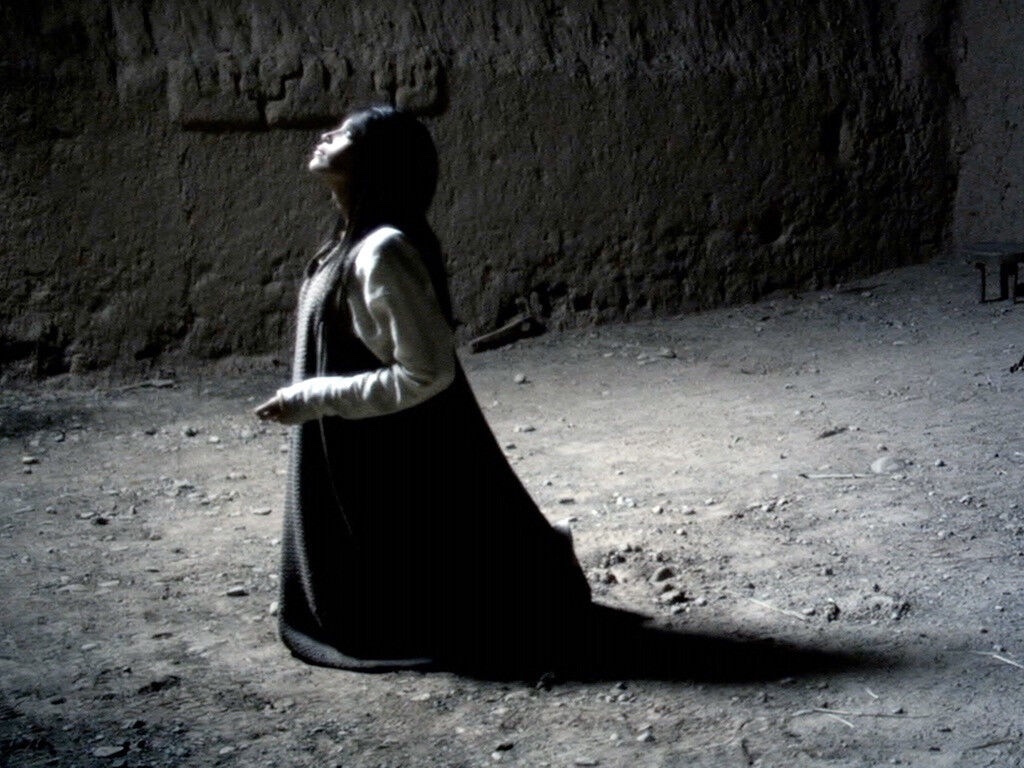
Habakkuk leaves us with two watchwords to aid us in trusting God to make sense of our nonsensical world. He invites us to (1) remain at our post (Hab 2:1-4) and (2) go to our knees (Hab 3:1-16).

“Our post” is the place where we can do the most good in the Kingdom:

  • It is where we walk by faith, not by sight (2 Cor 5:7).
  • It is where we hold fast the confession of our hope (Heb 10:23).
  • It is where we keep ourselves in the love of God (Jude 21).

“On our knees” is where we confess our reliance on the immutable God who works all things together:


In music theory notes that aren’t part of the harmonic chords in an arrangement are said to create “tension.” To move those notes back into alignment with the whole theme is called “resolution.”

Today’s headlines and clickbaits draw attention to drama that doesn’t belong in the desired intent of God’s Story. Nevertheless God knows how to bring resolution from the tension. He’s done it before; he’ll do it again.

Here is the world. Beautiful and terrible things will happen. Don’t be afraid.”

—Frederick Buechner

Good and bad. Horrifying and glorifying. Take it all…and put it in God’s great hands.

Selah, beloved. Peace. Be still.

just another miraculous birth?

“How will this be, since I am a virgin?”

— Mary, Luke 1:34

FreeBibleImages.com

If you know me at all, you know how much I love the writings of the late Eugene Peterson. The man has pastored my soul for decades. In one of his perhaps lesser known works, Christ Plays in Ten Thousand Places, he reminds us the birth of Messiah wasn’t the only miraculous birth in scripture, but it was the only one of its kind.

The eminent pastor turns our attention to pre-Advent scripture to briefly recount five miraculous births God was “critically and intimately involved in…”:

  • Abraham and Sarah (Isaac)
  • Manoah and unnamed wife (Samson)
  • Boaz and Ruth (Obed)
  • Elkanah and Hannah (Samuel)
  • Zechariah and Elizabeth (John)

And here is how he worshipfully distinguishes the heart-staggering birth of King Jesus from those earlier birth events:

The work of God in the conception and birth of Jesus through Mary is continuous with these five previous “impossible” births, but it is also different…

How so? we wonder.

In the mothers ranging from Sarah to Elizabeth, a barren womb was the impossible condition to overcome; these women very much wanted a child. But in Mary the “impossible” condition is virginity: here there is no yearning for or expectation of a child.

Christ Plays In Ten Thousand Places, 55-6

Peterson quotes Raymond Brown (The Birth of the Messiah, p314), who opens to us the compelling thought of this being the first and only birth through agency of a human womb in which God took the initiative.

It was all God’s idea!

In Mary’s case, she was a virgin who had no thought of bearing a child at that time. It was unthinkable to her. Maybe someday but not at this stage of her life, and certainly not as an unmarried woman!

Her pregnancy was ALL God’s idea! He wasn’t answering the cry of a barren couple, he was answering

Himself,

His own heart,

His own yearning.

This is the heart of Advent. This is the miracle and mystery of Christmas hope. Here is the gospel: God from the start has sought you, not the other way around. You weren’t even aware of your longing but that God was already at work filling your womb, your inner cry, with his life.

When Mary visited her cousin to tell her the news of her divine pregnancy, Elizabeth called her “Blessed!”

Allow me to put an ❗️on this post by pulling from another author I greatly admire. Picking up on Elizabeth’s same exuberant emotion, Brennan Manning applies it to all of us who are caught in the thrall of Christmas grace:

You are blessed! God’s desire is for you. And Jesus is the incarnation of God’s furious longing. He is your supreme Lover. It’s true. You are blessed. Your soul’s winter is over. The snows are over and gone. Flowers are blooming inside of you. The season of joyful songs has come. To you. You are blessed! The love of God is folly. No one is excluded. All (really!) are called to the banquet table. Come, and be filled. You are blessed! You can pray like a child, and enjoy God. You are blessed! Heal, and be healed…Amen. Amen. Amen.

Brennan Manning, The Furious Longing of God

Selah, blessed and beloved!

[tipjarwp mode=”button” link_text=”Click here to buy me a coffee ☕️ Thank you!” open_style=”in_place”]