weak-shaming

I can’t walk.

It’s not a temporary condition. It doesn’t only afflict me on certain days. It’s lifelong. If my overhead lift in the bedroom loses power I have to wait for it to recharge just so I can perform the simple task of getting into bed. If the ramp on my van quits working I’m stuck inside until somebody comes by to help (hopefully someone who understands basic mechanics).

There are days my paralysis gets the best of me. A good cry usually gets me back to center. The Good Lord knows and I feel seen.

I’m weak. It’s my lot in life. Don’t cry for me, Argentina, it’s all good. One of the reasons I know so is because there’s a verse in the Bible about me.

Look at your situation when you were called, brothers and sisters! By ordinary human standards not many were wise, not many were powerful, not many were from the upper class. But God chose what the world considers foolish to shame the wise. God chose what the world considers weak to shame the strong.1

Don’t let my pastor hear this, but while he was preaching this morning I dug into the text he was expositing (Gospel of Mark, chapter 2, verse 13, yes I was listening) from my Bible app. I came across this beautiful nugget of a story from The Preacher’s Commentary:

“To see Michelangelo’s Pietà—the sculpture depicting Mary holding her son, Jesus, after He was taken down from the Cross—is an overwhelming experience. Yet, the legend behind the stone is an inspiration in itself. Early in his career, Michelangelo was too poor to buy the marble for his sculpting. He had to pick his way through the rejected or ruined stones of other sculptors. As he eyed the marble, he said that he could see the figure inside waiting to be released by his chisel. Dragging it home, he freed the figures of Mary and Jesus that he envisioned and thus produced one of the miracles of artistic creation—from a reject.”2
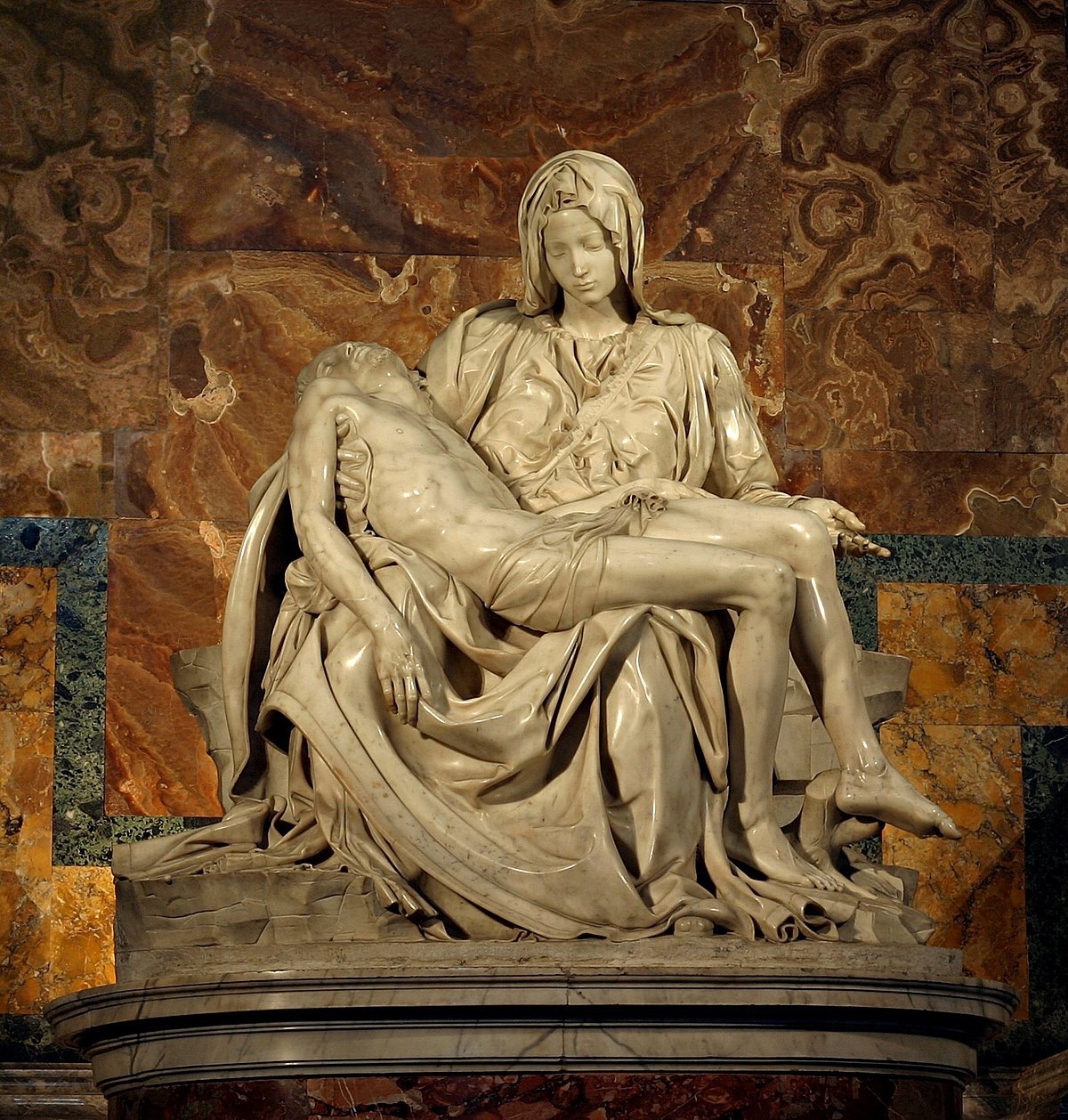
Paul, the apostle, knew something about weakness. But he also knew something about God‘s workmanship. He said we rejects and castoffs are really God’s “masterpiece,” his artwork…his poem.3

Here’s N. T. Wright to add some flavor:

Those who are grasped by grace in the gospel and who bear witness to that in their loyal belief in the one God, focused on Jesus, are not merely beneficiaries, recipients of God’s mercy; they are also agents. They are poems in which God is addressing his world, and, as poems are designed to do, they break open existing ways of looking at things and spark the mind to imagine a different way to be human.


“A different way to be human.”

My, my, my. Sign me up because the world’s way of being fully human is turning into an inbred mess! There’s no rhyme or reason to humankind left to itself.

Are you feeling pretty weak about yourself today? Yeah, I bet you are. Losing the same battles over and over again, bumbling and fumbling and stumbling your way through life. Overlooked, unappreciated, dismissed. You’re mild-mannered Clark Kent in a superhero world. Nobody sees who you are on your way to becoming.

Newsflash, God specializes in weak-shaming.

First, he goes into the junkpile and finds the most unlikely materials and says, “I’m going to make something beautiful.” Next, he takes his chisel and chips away all the hard edges and smooths and grinds out all the rough spots. It takes some doing, but he gets us there.

All the patrons of the ages will see it and know they’re witnessing a miracle. They are hushed by the pure poetry of sight in graceful curves and righteous detail. The glory of the Artist shines through and they can’t be in the same room with all that glory; they know they don’t belong there. They bow and take their exit.

If I could tell you that you are one of the lyrics in God’s Epic Poem or a statue in his gallery you’d be happy as a pig in mud. Well, you are, right along with all us other weak sauce saints. Right now its all rough draft, but I know the publishing date is set and the unveiling is scheduled and your scars and embarrassments and deficiencies will make sense on That Day. There’s rhyme and reason for it all. Just you wait and see.

I can’t wait.

———————————————————————

1 1 Corinthians 1:26-27, Common English Bible

2 The Preacher’s Commentary, Dr. Stuart Briscoe, New Testament, Mark 2, Ministry of Hope

3 The Greek word for workmanship in Ephesians 2:10 is poiema.

Timothy Keller asks “Do you know what it means that you are God’s workmanship? What is art? Art is beautiful, art is valuable, and art is an expression of the inner being of the maker, of the artist. Imagine what that means. You’re beautiful, you’re valuable, and you’re an expression of the very inner being of the Artist, the divine Artist, God Himself. You see, when Jesus gave Himself on the Cross, He didn’t say, “I’m going to die just so you know I love you.” He said, “I’m going to die, I’m going to bleed, for your splendor. I’m going to re-create you into something beautiful. I will turn you into something splendid, magnificent. I’m the Artist; you’re the art. I’m the Painter; you’re the canvas. I’m the Sculptor; you’re the marble. You don’t look like much there in the quarry, but I can see. Oh, I can see!” Jesus is an Artist!” And you beloved are His crowning achievement, His masterpiece! (Precept Austin)

mercy from a thousand directions

©️ Scott Mitchell

Moody’s my guy. I grew up reading his sermons, learning about his life, quoting him, reading stories about him. D.L. is my categorical “can’t wait to meet him when I get to heaven” people.

One of my favorite anecdotes was when Mr. Moody had an encounter with the Lord far too wonderful for words. Older saints would call it the “baptism of the Holy Spirit” or a “deeper experience of faith.” To describe that New York City event he borrowed an illustration from his childhood. Young Moody’s job for the family was to fetch water when the well ran dry. Now as an adult living on that same property, he remembered back when he had to carry pails of water to and from that spring. He got smart and laid pipes from the source to the house and just let the water come to him!

I was all the time tugging and carrying water. But now I have a river that carries me.

Moody said the rivers of heaven deluged him with the manifold love of God. It felt like tides and waves of mercy coming from every direction, so much so he begged God to make it stop!

‘Ah, what a day! I cannot describe it, I seldom refer to it, it is almost too sacred an experience to name. Paul had an experience of which he never spoke for fourteen years. I can only say God revealed himself to me, and I had such an experience of his love that I had to ask him to stay his hand.’”

Now that’s some mercy!

Moses got a jolly good dose of it when he asked for a vision and God gave him a VIP seat to the greatest show on earth. His request is not for more fireworks, thunder, blood, wind, locusts, armies, manna, or burning bushes. He wanted something more personal, so God did a really cool thing: he said “Do you really want to see me, Moses? I can’t do that because it would kill you; the weight of it would crush you.”

“However, this is what I’ll do… I’ll send a tidal wave of a thousand mercies at you ALL AT ONCE, the likes of which you’ll never, ever forget.”

Oh yes, some of that, please.

I imagine in eternity during one of our chats with Jesus, he will take us back to a moment on earth when we were going to work or headed to the mall. He’ll describe that day to a tee and tell us there were maybe four or five different times we could have been injured or worse but he dispatched angels of mercy to protect us. I like to think about stuff like that.

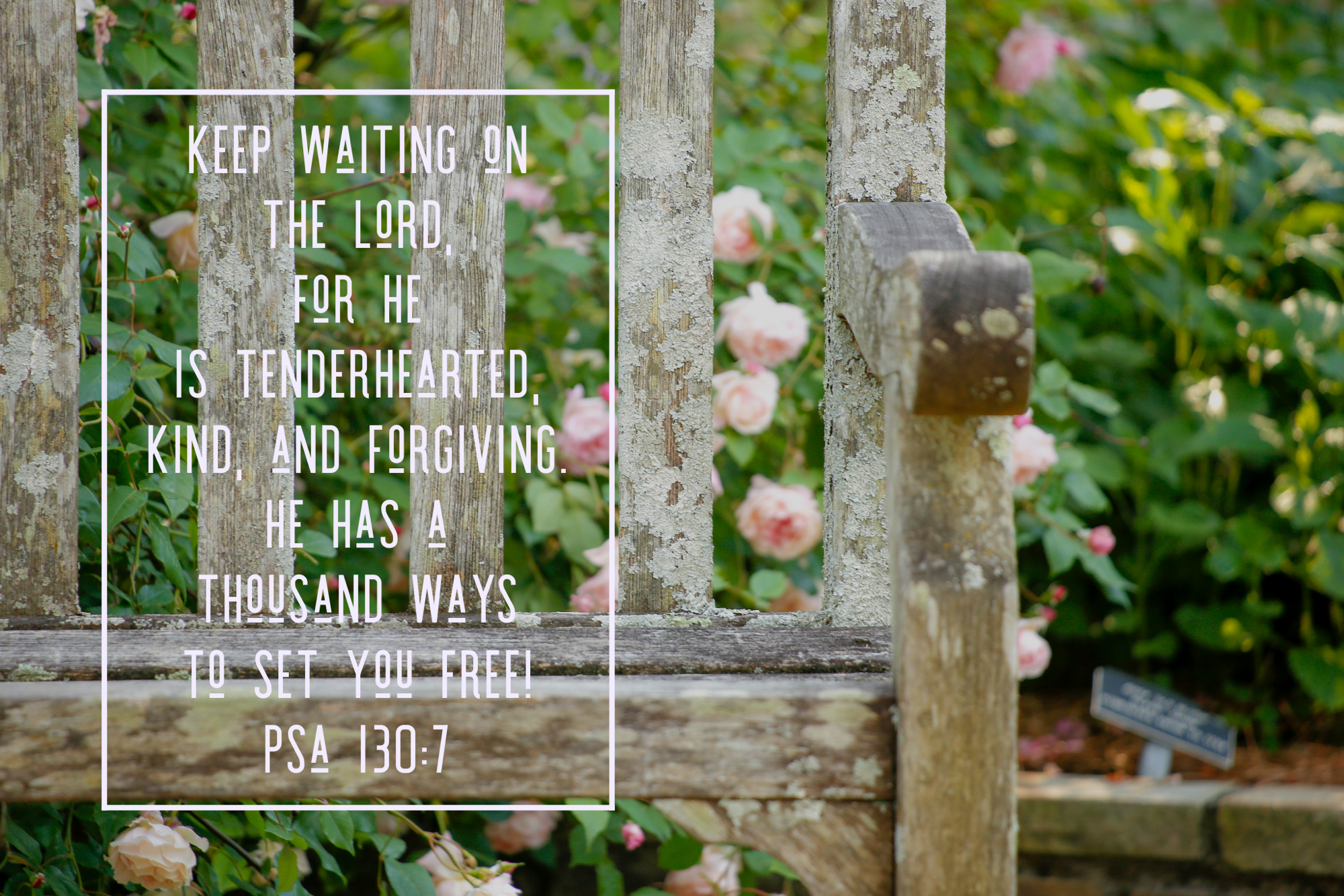
For with the Lord there is steadfast love, and with him is plentiful redemption. Psalm 130:7, ESV

Why don’t we hear this psalm quoted more often? I cannot recall the last time I heard/used this verse as a text in a sermon. It’s powerful. It’s delightful. What a promise!

My only low-key gripe with the Passion translation (photo at the top) is why did it stop at 1000? Why not 10,000… (hmm, sounds like a song Matt Redman should write) Or 1 trillion? I get that it’s poetic, and I quickly back away from my soft criticism. Truth told, I love how its lyrical gentility sits on my tongue:

“He has a thousand ways to set you free!”

Of course we all know he has way more than a thousand mercies at any given moment. I like how John Piper puts it: “God is always doing 10,000 things in your life, and you may be aware of three of them.”

With God are “plentiful redemption[s].” Beloved saint, worry not; you have not, nor will you ever, use up your quota of rescues at the hand of the Father! He longs to show you mercy…

the LORD longs to be gracious to you;

therefore he will rise up to show you compassion.

For the Lord is a God of justice.

Blessed are all who wait for him! (Isaiah 30:18)

A word. There are times when God’s mercies do not come in the form of hugs and rainbows, but rather in the form of chastisement or adversity. I would hardly be loath to tell you how God has saved me from myself many times by taking me through deep waters.

I told my son one time, “as long as you are looking for a way out rather than the way home, you’ll always be a prodigal.” There are times when we will not see the Lord’s banner of victory in our life until we wave the white flag of surrender.

Mr. Spurgeon has something to say about this severe mercy:

Take this in the very starting, that whatever thy trouble, or thine affliction, there cannot be anything punitive in it, thou must never say-“Now God is punishing me for my sin.” Thou hast fallen from thy steadfastness when thou talkest so. God cannot do that. He has once for all done it. “The chastisement of our peace was upon HIM, and by HIS stripes we are healed.” He is chastising thee, not punishing thee; he is correcting thee in measure, he is not smiting thee in wrath. There is no hot displeasure in his heart. Even though his brow may be ruffled, there is no anger in his breast; even though his eye may have closed upon thee, he hates thee not, he loves thee still. He is not wroth with his heritage, for he seeth no sin in Jacob, neither iniquity-in Israel, considered in the person of Christ. It is simply because he loves you, because ye are sons, that he therefore chastises you.1

Yes, a thousand times yes, God is fully willing to send a stranger to fix your tire on a rainy night when the highway is so busy you cannot get out of your automobile because of your disability. You can be jolly well certain God has you on his radar when you’re on your sickbed and the devil is terrifying you with fevered dreams of despair. He’ll also use your sickbed to find his Beautiful Face in the dark.

Start making a list of the times when you see God‘s mercies come to you, in big and small ways. Before you know it your list might grow to a thousand. Or more.


1 Charles H. Spurgeon, Chastisement, https://www.spurgeon.org/resource-library/sermons/chastisement/

all roads lead to jesus: an easter meditation

No, it’s not what you’re thinking. My theological sensibilities are well aware the title is misleading, but hear me out.

I was once in a coffee shop talking to someone who had a convoluted idea of religion. At one point he illustrated the road to salvation as being many. He waved his arm and said everyone sitting in the coffee shop at that time had come from different directions, on different roads, and by different means. “But we all got here just the same. It’s the same when it comes to ‘heaven’ (finger quotes). As long as our goal is to get to heaven, God will make sure we get there. And as long as the person is sincere and does good, no matter what religion or god they believe in, we all make it across the finish line. That’s how I see it.”

No, this post is not touting that. Not by a long shot.

Number one, our goal isn’t heaven, it’s Jesus. And it takes Jesus to get to Jesus. All roads may get you to Rome but only one gets us to the Savior.

Pssst…there is no number two.

This piece has more to do with the many kinds of struggles each of us have in our stories and, regardless of how deep and dark and devilish they may be, we can equally find the mercy of Christ that draws us to himself.

When you open Book 5 of the Psalms you immediately encounter a hymn to the steadfast love of God. It imagines a vast throng of the redeemed “gathered in” from all the cardinal points on a compass (Psa 107:3) to “their desired haven” (v30). It’s the only time “haven” is found in the Hebrew text, denoting a harbor or a safe place. We might call it a refuge.

They all come in curious ways. Some get there crawling, still more on hands and knees, many on their last gasp, and others with the stink of filth all over them. And how did they come to God’s encampment of grace? The *rest* (pun intended) of the chapter outlines it for us:

▪️ “Some wandered in from desert wastes” (v4)

Demoniac. Maniac. Boogeyman. He’s all kinds of crazy and you want nothing to do with him. Let him howl out there in the hinterlands, but make sure your doors are locked at night. Stories about him made children want to crawl into bed with their parents. He’s so bad the devil named him himself (Mark 5:9).

“Legion.”

One demon made him cut himself, another made him foam. Others made him curse and howl and rage against the light. Legion. Thousands. Who knows how many? Some of the demons gave him power to break his shackles. Stand clear of this, this…well, you couldn’t call him a man, could you? More like animal.

Easter comes for these guys too. There he stood, Light and Love, right in front of Legion. Walked right up to him. Sat down on a rock across from him. To everyone else, the creature was scary bad but to Jesus, he was a dying soul in need of a living Savior.

The power of the Man! No, not Legion. Jesus. The first thing he did was address the head demon; made him talk, tell him his name, beg for mercy. Think on this: the scariest demon inside this man crumpled at the voice of Jesus. Once he and his defeated army of demons left the pitiful creature, Jesus turned his attention to the man with eyes, undoubtedly, filled with compassion.

Just like that, the man was free.

Hear the gospel: no one, but no one – absolutely no one – is beyond the merciful reach of Jesus.

▪️ “Some…had been sitting in darkness and deep gloom” (Psa 107:10)

Mary Magdalene, the first witness of the Christ’s resurrection, came to the Easter story out of the dark dystopia of demonic possession (Luke 8:2). Seven demons crippled her soul and out of that gloomy dungeon of despair she found redemption and holy worth.

He brought [her] out of darkness and the shadow of death,
and burst [her] bonds apart.
(v14)


There was a day Jesus came to visit her at her tomb of despair and just before the first light of dawn on Sunday morning, she came to visit him at his. Mary wasn’t expecting to see what happened next, but she was the very first one to see it. She, a woman of questionable pedigree, was the first person to speak to newly-raised Messiah.

The event that was prophesied as early as Eden had an audience of one lone woman. Easter can sound pretty strange to the uninformed, but to the rest of us it makes all the sense in the world.

▪️ “Some were wrecked and ruined by a foolishly sinful life” (v17)

Jesus was being hosted at a dinner party (“party” being generous) when a woman stepped off the street and came into the dining area. Every man in the room sucked in air except Jesus. This unwashed woman was a known adulteress (Luke 7:39). Luke, who’s not disposed to hyperbole, used a label for her describing a whole other category of sinner. His particular word infers the woman has probably been condemned already by the synagogue and cast out, probably for adultery, or that she is perhaps a known prostitute.

Easter came early to her broken soul as Christ’s love resurrected her out of her corruption. The old hymn says,

“nothing in my hands I bring, simply to the cross I cling.“

This woman had nothing in her hands but she clung to the feet of Jesus, weeping with joy and gratitude and kissing his feet nonstop. She unbundled her hair and used her locks to dry the Savior’s feet.

Jesus didn’t seem the least bit embarrassed at the display. He remained in place, affording her the worship of humanly outlandish proportion. But it could never be enough for her lavishly forgiven heart. Love Incarnate elevated her to sit with him in heavenly places while pious Simon and his judgy buddies were left to deal with their own hardened and condemned hearts.

▪️ “Some because of desperate conditions and terrifying calamities” (Psa 107:23-27)

We call him “Blind Bartimaeus” (Mark 10:46). “Son of Timothy.” That’s like calling me “Tom Mitchell‘s crippled son.” There he was, just outside Jericho, fifteen miles from Jerusalem. He is sitting there with his begging blanket, the cloak used to catch coins tossed in his direction. Suddenly he hears a great noise, a crowd of people cheering and laughing. He’s blind and pathetic so he doesn’t know quite what’s going on but he’s making out some words from the onlookers.

Above the din, his voice is miraculously transported to the ears of Jesus.

“SON OF DAVID, HAVE MERCY ON ME!”

Jesus stopped dead in his tracks. Like the woman on an earlier road hemorrhaging blood, when Jesus knew someone in the crowd had touched him. Well, yeah, Master, everybody’s touching you! You are in a crowd of people pressing in on you! No, Jesus says, not everyone. Someone.

Here too, on this day, among a cacophony of voices, Jesus heard the one. A shipwrecked soul. A drowning man.

“Bring him to me.”

This had never happened to him before. Someone became interested in “blind son of Timothy.”

“He is calling for you.”

Not “son of Timothy” but you. You matter to him. You stopped him dead in his tracks. You will be his last miracle before the cross.

At once the man “sprang” from his prized beggar’s plot, leaving his cloak with coins behind him. Suddenly, Jesus became more important to him than those alms in his blanket. Nevertheless he left it all behind … simply because Jesus called for him (Mark 10:49-50).

Not all roads lead to eternal life. But all roads, especially the hard ones, can lead you to Jesus. It’s through Jesus, who is the Resurrection and the Life, we come to the end of our roads and finally make it home.

Some through the fire
Some through the flood
Some through great trials
But all through the blood.
Some through great sorrow
But God gives a song
In the night season and all day long.”

– George A. Young, God Leads Us Along, 1903

I’m reflecting this Easter season on the many paths of pain that have led me to Jesus. Not just disability, but a host of others. I’ve faced ruin and I’ve been broken up into pieces against the shore more than a few times.

There’s a lot of ugly in my story and things I’d rather not tell you about. Things that took me right up to the rabbit hole and might’ve pushed me over and disappeared me forever – save for the grace of God. I’ve dragged through trackless wastes and crawled on desert floors.

Fire, flood, great trials, you name it. There’ve been times I’ve made my own bed and had to sleep in it and times when the cards were stacked against me. But each and every time I’ve heard the rumor that Jesus is calling for me.

Turns out it was more than a rumor. And because of it,

I give thanks to the Lord
for he is good
and his steadfast love lasts forever
(Psa 107:1).

Amen.

(Selah.)

[tipjarwp mode=”button” link_text=”Thank you for your generosity!” open_style=”in_place”]