I’m wondering, is there a statute of limitations on mourning?
(Asking for a friend.)
In the hurry-scurry bustle of Christmas the one thing you don’t plan on is burying your only child. That happened to us two Christmases ago.
On a cold December Sunday, in a driving rainstorm so bad we couldn’t even get out of our vehicle, Sandy and I could only watch through blurred windows as the workers lowered our 24-year-old son into the maw of earth. No minister. No ashes to ashes. No seated family as mourners filed by. No quiet assurances. No formal farewell.
There’d been the indoor service already but this was perversely anticlimactic. Sure, we’d had our private goodbyes in the viewing room before the lid was soundly shut, but this – this! – was morose. It was a scene straight out of Copperfield.
And with the caretaker’s back turned to us, busying himself with straps and pulleys, we unceremoniously drove away, leaving him to it. The surging rain protested even more loudly against the metal of the van as we pulled out into traffic.
• • • •
Someone quipped, “God gave us memories so we can have roses in December.” But what if December’s garden shears separate bloom from stem? What, then, is left?
In a single week Sandy felt ambushed by a doctor who suggested counseling (not a support group, mind you, but a shrink), a well-meaning associate (being kind) who bluntly chastised her for not letting it go, and someone even closer who wondered if it might not be time to move on. That was eleven months ago…when Graham had only been covered in earth for a year. A setback, but she powered through by grace.
I, too, have had my moments. Only recently, I had a horrible, terrible, very bad Thanksgiving Day, and, full disclosure, let me tell you why. It was the first holiday where Graham’s name was not mentioned at all by family and friends. But that’s not on them! It’s normal, it fits our patterns and protocols. Really, it’s almost been two years after all. I assure you, it didn’t take me to a dark place of bitterness against anyone, it just made me mindful of the too-soon (for us) end of an era.
Only, it’s not yet over for us, sorry. We’ll continue to keep our distance for awhile longer, but not because we’re loathe to move on. We just need space to grieve. And that’s okay – because in our mourning we’re becoming better worshippers.
Do I grieve for December 16, 2013 and how it all fell out on that day? Some, of course, but mostly what happens after that day. Not seeing Graham win over his demonic addictions and become my best friend through life, no family photos, no grandkids to spoil, no future milestones to celebrate. That’s why they call it losing a loved one, I suppose. There’s so much more you’re forced to give up than a person.
• • • •
When I shared with Sandy what I was going to say in this post, she balked at first. What if everyone thinks we’re depressed? What if they worry after us? Worse, what if they think we think they let us down? Egads, what if a council calls us in?
She said none of those things, of course, but they were hanging there still, unsaid, between us.
So I quickly cantered, explaining it’d be like one of David’s most depressing psalms: starts off all woeful, dark, and hopeless but lands where the Lord always shepherds the troubled who lean into Him real hard. With promise and praise.
No pity, please. We’re not sitting over here needing stroking and tons of cards. (But money, money’s okay.)
😊
We’re good. We’re so good. All is well. Promise.
And this is what we’ve learned so far on our short journey:
- Closure is pure psychobabble. Grief is good, for the Lord is most tender with the broken-hearted and that’s a good thing to live with. He isn’t wanting to fix you, He wants to heal you. There’s a difference. One is mechanical, lacking artistry, the other is relational, a long-term, hands-on, intimate shaping process.
- Every time you turn to Him for comfort and lay down your arms of accusation, or stiff-arm of inconsolability, He will show you more of Himself – and that will more than suffice even when you’re all too aware of what you’ve lost.
- Life tends to shrink and become simpler when you’ve endured a greater loss than anything you’ve ever had to give up. When everyone gets up in arms over the news, or exasperatingly goes after the next new thing, the ones left standing in the wake of such loss – whether long ago or last year – prefer a saner, more quiet place of vigil. They turn to a truer reality. It’s the only thing that will get them through.
- While those whose hope and stay is with the One who invented resurrection and life learns to gain a long-view of hope, it’s equally important to know that His Plan unfolds in tiny unimportant moments where you’ll miss heaven on earth if you’re not paying attention. Life is a mist, mortality is an exact science, and tomorrow is a year away. Suck all the marrow out of today. Shorten your pace, lower your arms, be present, and listen for the hum of the homeland in the right now.
- Finally, not because it’s the end of our lessons, rather for the sake of your attention span, we’re learning to give people and their issues a wider berth, a more grace-filled response, and, because of our son’s story, refusing to concede too quickly their fate by writing them off. (Not naming names, but I need a lot more work in this area.)
These aren’t losses, but gains. And these are the greater blessings that come through our extended season of bereavement, so we’re not looking to end it too soon.
There’s sooo much more to learn.
And, so, we’ll soldier on, and we’ll still grieve.
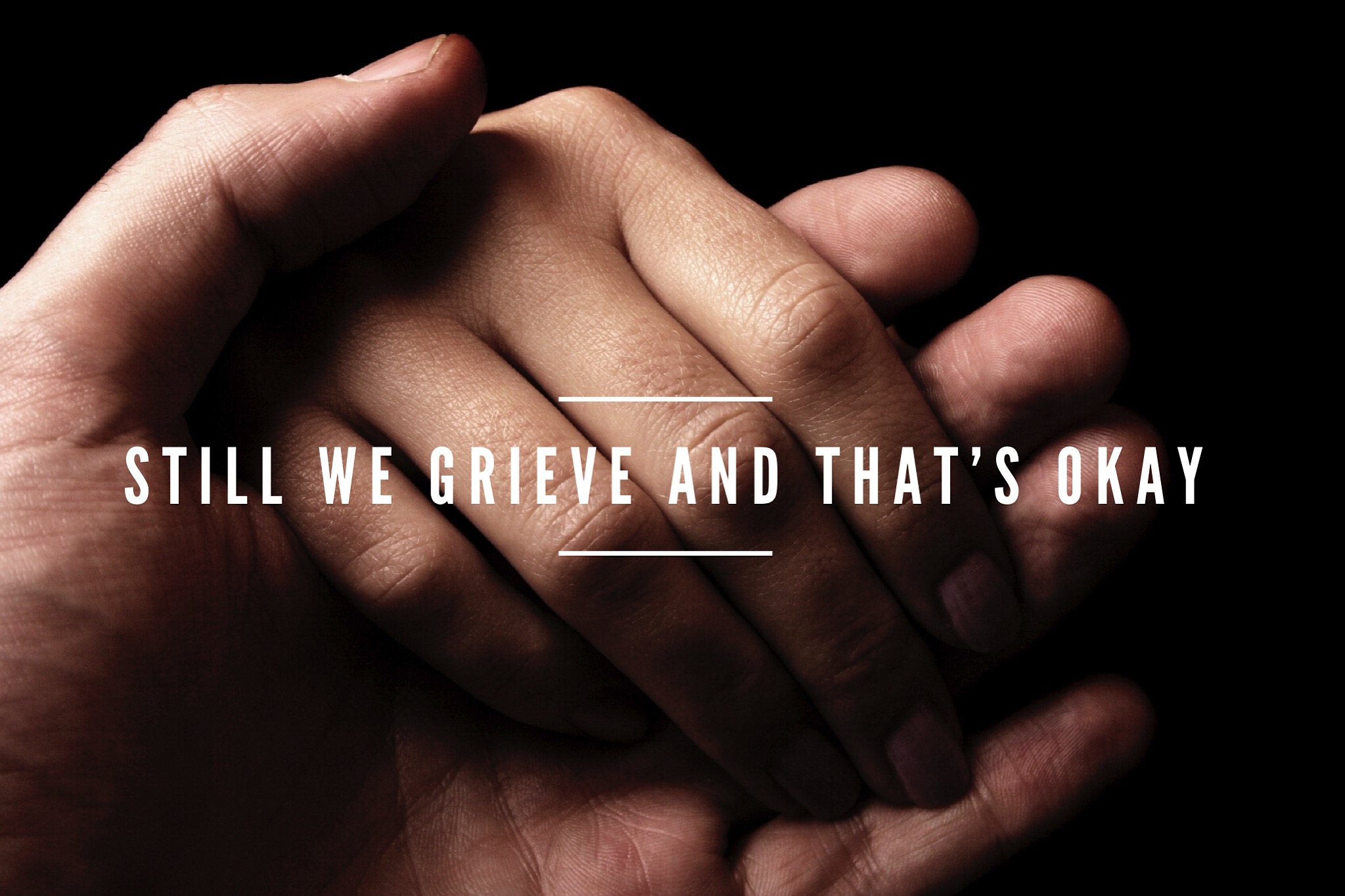
And that’s okay.

