God Is Not Finished

IMG_0883.JPG
If you’ve managed to string together some years of living, you can’t deny the times you’ve stood at a crucial crossroad and asked, “How will I get through this?”

And yet, here you are.

There’ve been some Goliaths here and there, some Waterloos, a Gethsemane or two, and perhaps even a dark night of the soul to spice things up. But you made it. You’re here and in one piece. Yes, you’ve accumulated your share of scars, a wine cellar of bottled tears, and there might even be a hint of PTSD, but the fact remains, you came through. It wasn’t bootstraps or fine breeding that got you through, either. It was God.

I’ll tie a bow on this four-part “God Is Not…” series with this final faith-building installment. In preparation for whatever Everests or Hades that loom before us in 2015, whatever crises of belief to assay our faith, God has already won the day and we are citizens of His unshakable Kingdom.

So what have we learned about God-in-crisis? What is the climate in the throne room when the fury of hell is unleashed? What can we expect from Him as the days grow more uncertain, as frightening darkness encroaches, as alarms are sounding, when even the experts are turning to gloom-and-doom forecasts?

We’ve learned that:

  • God Is not nervous in the least

  • The Psalmist says He even “laughs” in the face of the would-be oppressors – but smiles on His own, because

  • God is not aloof and uncaring

  • He looks intimately upon us as we toil and strive against the onslaught of waves – and He’s not at a loss…for words. He will stand and shout at the storm “Enough!” and carry us through.

  • And, God is not handicapped

  • All the resources of glory are at His disposal and in full operation to countermand the wickedness of evil’s hate against His own. He is not self-absorbed but “will fight for you.” (Exodus 14:14)

And the word that feeds our soul today is,

  • God Is Not Finished

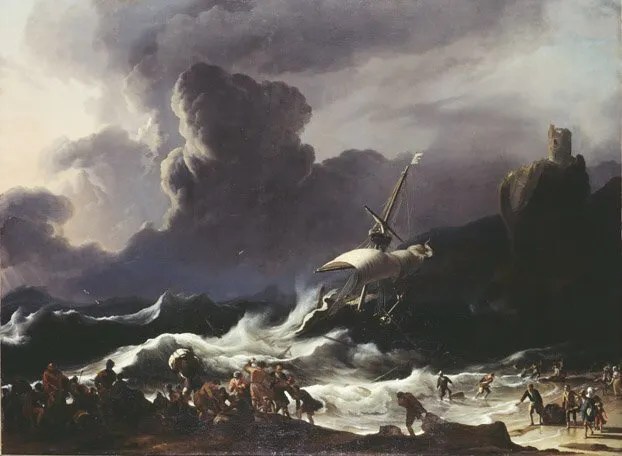
Paul, the apostle of suffering, said he’d been shipwrecked three times, was once set adrift at sea and, at other times, experienced “dangers at sea” – all in one paragraph (2 Cor 11:25,26). He and the sea didn’t get along too well, it would seem.

Acts 27 gives a harrowing account of one such shipwreck. Luke accurately recounts that Paul was a carefully-guarded prisoner and was loaded onto a cargo ship for an appointment with Caesar in Rome. His case as an insurrectionist against Rome was going to be reviewed by a Roman court with Caesar himself presiding.

It wasn’t the best time to be sailing on the contrary Mediterranean and Paul suggested to the captain they might find a harbor to winter in. The captain considered it but sought other counsel and was told the ship was sturdy to face whatever the sea could throw at it and, besides, weren’t they under some time constraints to deliver their charge? You guessed it. They pushed on – straight into the teeth of a nor’easter.

For two whole weeks they battled and toiled and despaired. They didn’t see the sun for fourteen straight days but fought through night-like conditions 24 hours a day, without food as the all-hands-on-deck situation kept them active and occupied. This was a once-in-a-lifetime storm that terrorized even the most hardened veteran sailors. And there was Paul.

Nearly two weeks of this and Paul was in his quarters one night when he was visited by an Angel who told him,

Don’t fear this storm, Paul. You will not die and none of the other 276 men will die, either. You are destined to speak to Caesar and to Caesar you will go!”

Paul believed God and shared this news with the crew later that night.

“Men,” he said, “God has told me we will not die. Look, you haven’t eaten in two weeks, so eat!”

It was a strange thing to say. The boat was still being lashed by rains and wind and the waves remained mountains of fury against them, but in the midst of it all, as Paul surely had to shout to be heard, there was the promise of deliverance – and the respite of food.

I think we’re in a calm before the storm hits. Indeed it’s coming and it’ll be unlike any past storm we’ve come through before. I believe we’ve foolishly pushed out from Crete instead of listening to the warnings of God, trusting rather in the size and seaworthiness of our vessels. Consequently, there are frightening days ahead – days of peril and dashed hopes. But even in this, God is not absent. His hands are not tied. He will come and save us because we have islands to save and Caesars to stand before and Romes to invade and snakes to shake off our hands – because Acts doesn’t finish with chapter 27 but moves seamlessly into chapter 28.

But the cost will be high.

Remember, it is not the storm – or the size of it – that dictates the outcome. That’s the Lord’s call. Some of us will have to swim for our lives, some will cling to planks and others will have to fight for mere scraps (Acts 27:44) – but God has spoken, He is not finished, and we will make it to shore.

Amen.

• • • •

O God, our help in ages past,
our hope for years to come,
our shelter from the stormy blast,
and our eternal home:

Under the shadow of thy throne,
thy saints have dwelt secure;
sufficient is thine arm alone,
and our defense is sure.

Before the hills in order stood,
or earth received her frame,
from everlasting thou art God,
to endless years the same.

A thousand ages in thy sight
are like an evening gone;
short as the watch that ends the night
before the rising sun.

Time, like an ever-rolling stream,
bears all its sons away;
they fly, forgotten, as a dream
dies at the opening day.

O God, our help in ages past,
our hope for years to come,
be thou our guide while troubles last,
and our eternal home!

- Isaac Watts
God Is Not Silent

IMG_0505.JPG
While I’m letting a particular ‘word’ marinate and root into the soil of my heart before I share it with you, I thought I’d blog a series of posts on the attributes that are foreign to the nature of God, to remind us just Who it is we’re dealing with and Who deals with us.

Again, it’s clearly evident to us all what makes our God bigger and better than any god known to man. He’s without rival, yes; He’s unique in wisdom, absolutely; He’s present with us in every moment, indubitably so; and He’s unchanging in His disposition (loyal love) to His own – oh, hallelujah, yes.

Sometimes to trace who – or what – He is NOT can be just as reassuring to a pilgrim as those assets we already hold dear. A few days ago I offered the first “God is not…” attribution (God Is Not Nervous) and today’s offering welcomes another encouraging negative.

Just to reiterate, not long ago I asked the Lord to share His heart on the matter of how we may best be prepared for what is ahead. My heart cradled a single word in response and I knew I needed to pass it along to those I am in community with, both on this platform and in my personal connections in life.

Consequently, I felt it expedient to lead up to it (i.e., the word on my heart) in this manner because the nature of what I’m sensing may be the initial soundings of a time when Paul prophesied many would begin to fall away from the faith.

If that is so, then I know it will be a troublesome time for the saints who will begin to feel abandoned by a perceived uninterested or vengeful God. The feel-good homilies we’ve dieted on will be hard-pressed to satisfy the grave concerns that will grow like a brush fire among the ranks. Everything in our logic will scream that God is a bad Parent and He has left us to the miserable devices of the evil one.

To that end, I’m obliged to parlay these fears with a second “God Is Not…” attribution that, hopefully, will do its work to make ready for the Lord a people prepared.

  1. GOD IS NOT NERVOUS
  2. GOD IS NOT SILENT

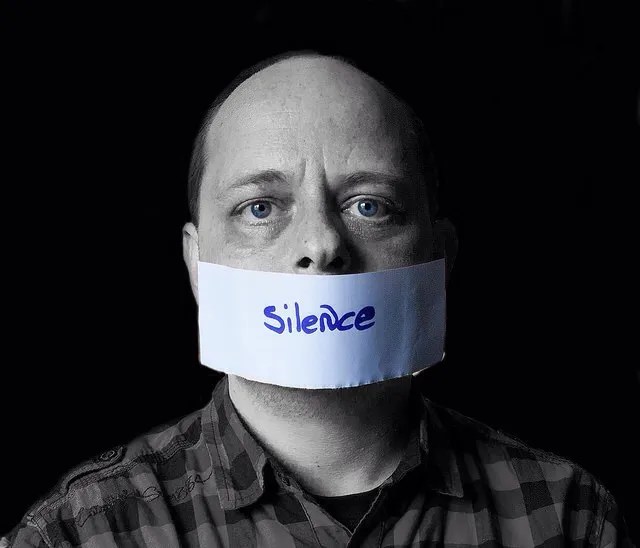
I remember meeting with some brothers and sisters from various faith communities at a notorious abortion mill in downtown Atlanta a few years ago. We reconnoitered in the early morning, hearing from a spokesperson our purpose and strategy for such an assembly. We were told the events of that morning were not considered a protest, but rather a prayer initiative, and a silent one at that. Each of us were given a swatch of red tape to place over our mouths and told we were “identifying with the silence of the pre-born who have no voice to defend themselves.”

Next we moved out in a single file line – all twenty or twenty-five of us with mouths taped – beneath an overcast sky, and proceeded to do a “Joshua March” around the block where the facility was located. Six times around, then, on the seventh, we stopped and spread out in front of the abortion clinic, facing it, and silently crying and praying for God to defend the unborn and rescue more from harm. Cars drove by but were unacknowledged; a few honked, presumably knowing our objective and offering their counterproductive klaxon support, but the silence of our little army prevailed.

Not a word was exchanged on that curbside but there was powerful rhetoric nonetheless, and in only days, we heard the mill was out of business. Praise be to God.

A silent assembly.

A monumental result.

There was a time when Jesus was silent when justice was demanded. He came, the gospeler records, to seek and rescue those who were in peril, but on this occasion, He stood pat. Of the two gospels that feature the story of the Syro-Phoenician woman (her family tree was pure Canaanite), only Matthew adds the drama that Jesus was silent in her moment of severest anguish.

This lady – this mother – came to Jesus with a truly pathetic need: her daughter – her sweet baby girl (Mark uses the endearing “little daughter“) – is RIGHT THEN BEING TORMENTED BY A DEMON (present tense, passive voice). She’s run out of hope, help and answers. So she runs up to Jesus on behalf of her defenseless little girl and cries

HELP!

And Jesus just stands there. Immobile. Silent.

The disciples sure didn’t want to be involved in this Gentile drama. They didn’t want to be in this country anyway. These people were the enemies of Israel, they killed their ancestors, enslaved them, and, horror or horrors, sacrificed their children to their fiery gods. This woman was just reaping the whirlwind. Served her right. C’mon Jesus, let’s get out of this godforsaken town!

And still, Jesus just stood there, silent and unmoving (not unmoved!). Quiet as a shut-up church.

We can speculate and try to soften the motive of Jesus’ silence to this distraught mother as much as we dare, but there’s no getting around it: Jesus must be true to His mission. He tells her straight up she wasn’t on His to-do list for the day.

Allow me to give the sequence of how this convo played out so you can better experience the pathos:

  • Mother says ‘help, my daughter’s being demonized!’
  • Jesus is silent
  • Mother appeals to disciples
  • They express their discomfort to Jesus
  • He turns and tells mother ‘there’s nothing for you today’
  • Mother isn’t deterred; falls at His feet and cries for mercy
  • He tells her she’d be taking mercy meant only for His people
  • Mother knows He has mercy enough and asks for even some small miracle for her little girl
  • Jesus explodes in joy and gladly rewards her faith
  • Daughter is instantly and comprehensively healed

Was He really reticent? Absolutely not.

Was He just messing with her? No way.

Was He just making of her an illustration? I’m pretty certain that was not our Lord’s motive.

Then what? Why the silence? Why the perceived hesitation?

Here’s what I think.

Before I answer, I want to bracket here an event in the future that might offer a little insight to our puzzle. In the Revelations of John, chapter eight, we are told that prior to Jesus’ opening of the seventh seal there is a full half-hour of stilled and absolute silence in Heaven. It’s as if all Heaven draws a collective breath when it realizes Jesus is about to do something of which – when He does – will bring about the full and final plan of His Story from All Eternity to a quick and surefire end.

There was silence just before the monumental shift.

Back to our gospel story. This is the only trip Jesus makes into the Gentile region during His years of ministry. We know He never did anything unless the Father showed Him what to do. There was no arbitrariness to His mission, including this very encounter.

Jesus – through the Father’s will – intended to heal this mother’s daughter from the outset. No, He wasn’t playing games with her, but, instead, He was silent because He was about to change the “game” and show His men that the gospel was for the world – even wicked Canaanites. And this woman followed the script beautifully! She didn’t know there was a script, but she played her part while the disciples struggled with theirs. This very conversation was for His men’s benefit. The Savior wanted them to see that children of Abraham – evidenced by such faith, not pedigree – could be found among the most paganly primitive peoples.

So…how does this attribute serve as encouragement for the sobering word the Lord has laid on my heart for His followers in 2015? Only this: do not ever translate God’s silence as aloofness or indifference. Like Jesus and this Canaanite woman, God will use silence to highlight the fact that He’s about to change the atmosphere and make all things new.

Just like that sad little abortion mill in Atlanta. From the moment we gathered, taped over our mouths and marched, it was already over for them. Silence was indeed golden.

NEXT: God Is Not… ???

Our Infinitely Accessible Jesus

IMG_0490.PNG

Some years back I attended a large conference featuring some of the rock star preachers of the reformed tradition. While I’m probably between three and a half and four points myself and not a fully vested Calvinist, I’m quite comfortable around their species. So much so that back in the day, each February (several years running), I gladly donned the lanyard and name tag and gate-crashed their convocation.

This particular year they featured a guest speaker from outside their tradition and I thought it’d be a scream to hear what he’d say to his audience. I hasten to add: to say this man is my hero understates his meaning in my life. His ministry in the Word is responsible for setting my course aright and giving me a love for the scriptures.

All of it was a set-up for supreme disappointment, however.

I’m choosing to keep him nameless and offering very few clues to his identity because, well, to judge a person on one isolated incident is unwise and plants another seed of pride in the soil of my heart, and Lord knows I don’t need that! I’m also trying hard to give him the benefit of the doubt. Very, very hard.

But, before I share with you what went down, I must interject here, for any readers who don’t know me well or at all:

I’m in a wheelchair. Have been for 33 years.

In rehab we were identified as either “quads” or “paras” depending on number of limbs affected by our paralysis. Shoulders (or neck) down paralysis meant four limbs were affected (quad) and waist down (or chest, as in my case) meant two lower limbs were incapacitated.

I’m a para. My “pair a” legs are useless, hence the wheelchair.

While the world of accessibility was still fairly prehistoric when I was injured, it was coming out of its dark ages well enough – but it was still a decade prior to the Americans with Disabilities Act of 1990 (ADA) which made it the law of the land to make public spaces disabled-friendly. It didn’t – or couldn’t – change everything, however. There are still two terrains I like the very least to roll on: carpet and slopes – uphill, of course.

Back to the story. The auditorium where this conference was hosted was huge, beautiful and up to code with all the convenient accoutrements of accessibility (it was the mid-90’s), except: there was the aforementioned thick-pile carpeting and theater-grade slope.

Gosh, I’m taking too long. Okay, let me get to the point.

The wheelchair-friendly area was wayyyy down front, and one could easily fly down one of the many aisles to the appointed section and park. Trouble was, it meant rolling yourself back uphill in plush carpet to the exits.

I chose to avoid it entirely by sitting wayyyy in the back, on an aisle, beside a pew. Ushers and hospitality folk kept asking if I wouldn’t rather sit down front but I kindly declined.

The man I was there to hear spoke in one of the main plenary sessions, and he didn’t disappoint. He was brilliant! When he was done I sat back in my shadowed canopy, beneath the balcony, debating on whether I would go down front and shake my hero’s hand. Was it worth the trek back up Everest? No? Yes? Okay…here goes…

There was a crowd around him and he spoke briefly only to several, perhaps ten minutes or so in all, but there was also another crowd around him – his handlers, or glorified bodyguards. There must have been 6 or 8 chisel-jawed, alert-eyed men standing close by, surveying the crowd. I was in the back of the pressing throng. I’d come this far so it became even more vital for me to tell this man how his ministry moved me. I was only fifteen feet away!

The crowd slowly dispersed, but I didn’t follow suit. I remained, hopeful. I figured he’d see me, know I had come down the aisle at some cost, and take some pity. Momentarily, he looked in my direction, expressionless, and whispered to one of his handlers. Hope rose within, imagining him saying he needed to get down the steps to where I was on the main floor. Not exactly what happened.

After eyeing me briefly, and whispering to the man on his right, he turned his heels away from me, and was summarily whisked off the stage and into another direction entirely. When I realized what happened, anger welled up. Not at him so much, but because I was left at the bottom of those steps, fifteen feet away, looking and feeling pitiful and pathetic. I quietly turned my chair and started the ascent.

Rest assured, there’s no bitterness in me; I’d forgiven him long ago. If I saw him in another context, I’d still want to shake his hand, bless him and never bring this up. Benefit of the doubt, right?

Then there’s Jesus.

We can safely assume He waited often until every last one of the thronging masses was personally greeted. Would He say “Come to Me” then leave you standing – or sitting – alone, in the cold? He was accessible, yes, whether Gentile, woman, child or invalid. If someone was desperate for an audience with Him, they were granted quarter, time, and His keen attention.

His entire gig was love. Jesus’ men sometimes wanted to act as His handlers, put the people at arm’s length, but He’d kindly rebuke them and say “I’ve come for this very reason. If they want to know Me, they can know Me.” Then He’d touch a leper, hug a toddler, engage a Samaritan woman by a well (“Where’ve You been, Jesus? With that woman? Are You crazy?“), or risk His Holy-man reputation by letting a saved harlot cling to His feet at a dinner party.

He was out there, in the open, accessible to all – even those who wanted to kill Him. Once, when He was accosted by those who sought Him harm, He ridiculed their sneaking and plotting, reminding them if they ever needed to know what He was up to, it wasn’t a secret; they should know where to find Him: with the people, loving and doing His Father’s work.

And none of that’s changed. You know right where He is. On His throne, in glory, beside the Father … accessible. You don’t need a name tag or insider credentials. It’s just you, and Him.

No carpet.

No slope.

No handlers.

May I tax your patience for one more – very quick – story? I just want you to know there’s some good guys out there also. Lots of ’em. Like Joe Stowell. He deserves to be named. This guy is one of evangelical’s luminaries. A humble, kind, inspiring, rock star of a teacher. When he was still the president of one of our most respected Bible colleges, he was a main speaker at a coliseum event – yes, back in the 90’s (I hung out at a lot of conferences in the 90’s) – which I dutifully attended.

I was in the very front row, transfixed by the message he brought – such clarity and grace – and I thought: I’ll shake his hand.

Mmm-hmmm.

Not what you’re thinking.

Long story short: though I was already positioned near the stage, many stepped over and around me and made a beeline to where he was, cutting me off from any accessible angle. But sometime in the middle of that fray, from his vantage-point, he looked and saw me – somehow – and made a beeline toward me. Many who’d stepped over me started to speak to him, but Mr. Stowell smiled, passed by them, and kept his vision on me.

When he got to where I was, he did the most amazing thing: in one motion, he collapsed down to one knee, put his hand on my armrest (a gesture of affection and identifying) and looked me in the eye, then asked my name and all about me.

I think this is what those who felt cut off by religion must’ve felt like when Jesus by-passed all that, swooped down and planted Himself in their orbit.

Hi, Scott, I’m Jesus. I’m the Way…”

Then:

Follow Me. I’ve made it accessible…”

Well, now. That’s an invitation I can’t refuse. I can’t wait to shake His hand and tell Him how His ministry has moved me. And I bet He’ll give me all the time I need.

And you too.