big, big house


In my Father’s house are many rooms…I am going away to make ready a place for you.

John 14:2


By the time they arrived The Dwelling would be set up.

Numbers 10:21


Its a big big house
With lots and lots of room

“Big House,” Audio Adrenaline


No doubt we are all familiar with the revelation of Jesus in John’s gospel, “In my Father’s house there are many rooms…” Your Bible might read ‘mansions’ or ‘dwelling places.’ Those exciting words conjure up all sorts of images and get us giddy for glory. Big ole mansions for everybody. Streets of gold. Gates of pearl. Pity the person who settles for “a cabin in the corner of glory land.”

I recall in my youth how I stumbled over the translation “rooms” and got sad because I didn’t want another version of my bedroom in heaven. I wanted a big ole house with a big ole yard all to myself!

At 62-years old I think I’m starting to mature. Yours truly was reading from the book of Numbers recently and caught a really cool shadow of our future ingathering to Glory. I camped awhile in chapter ten as the glory-cloud hovered over the text.


And the Kohathites set out, carrying the articles for the sanctuary; the tabernacle was to be set up before they arrived.

Numbers 10:21


Let the reader understand. The Kohathites were responsible for the most holy objects in the tabernacle: ark, altar, veil, table, lampstand, etc. Whenever the Israelites camped, before any tents were pitched, the tabernacle was the first thing set up. In went the Koathites, carrying the Sacred Objects.

When Israel decamped, it all happened in reverse, with the tabernacle dissembled and the Sacred Objects carried out first. First in, first out. God was always out in front. Always. It’s a beautiful picture: before any of the tribes arrived, God was in place, waiting for them.

In those days the tabernacle was always moving, always mobile, mile after mile, battle after battle, set up, break down, backward, forward, another day, another long night of the soul, another leg of the journey… starting to sound familiar, fellow temples?

But one beautiful day a permanent house — with rooms (1 Kings 6:2-8; 1 Chron. 9:33; Ezek. 40:5-36) — was built. It suddenly dawned: when Jesus said, “I go to prepare a place for you,” and in his house are “many rooms” this is the picture of that.

We get caught up in the idea of heavenly “dwelling places” and romanticize about our having “mansions” in gated communities but that is not the picture Jesus was painting. He’s showing us his house is a Temple in which he is its Center. And there we will ABIDE with him, and he will ABIDE with us. Forever.


Soon and very soon the trumpet will sound and every nation, tongue, tribe, and ethnicity, Jew and Gentile, saved in Christ will, in their turn – the dead in Christ first – leave the wilderness behind, enter the wide open gates, and find our home ready.


Come, ye Judah!
Come, ye Issachar!
Come, ye Levites!
Come, Manasseh!
Come, Zebulun!
Reuben and Simeon and Ephraim, Come!
Come along, Benjamin and Asher and Gad!
You too, Dan!
And Naphtali!
Come, Egypt!
And you, Rahab and Babylon, Come!
Philistia and Tyre, yes you!

Come with us, Hobab!


Time out. Who? Hobab? Read on in Numbers 10 and we’re introduced to Moses’s brother-in-law. When Israel was breaking camp after a year-long stay at Sinai, Hobab was going to opt out. Moses wasn’t having it.

“Come with us, brother!” Moses pleaded.

“Nah, I think I’ll just meander back to my people,” Hobab replied.

“Nonsense,” protested Moses. “We need you! We’re your people! There’s room!”


One of my favorite kingdom parables is the story of the Great Banquet. Invitations were sent out to all the Host’s family and friends. From the jump everyone’s intention was to go; it would be the social event of the year! But as the date for the banquet drew near, every last one bailed. Excuses, excuses.

Long story short, the Master of the House was not happy. He instructed the servants to go up and down the alleyways, into the red light district, through Shantytown and all over creation, and “compel them to come.” He stipulated that he wanted his Big House filled.

Come with us, Hobab. We’re going to see the King!

“I want my house teeming with children,” the Lord of the Feast says.

It’s a big house, with lots and lots of room. Rooms galore. Ample space.

Roomy…with a view of Jesus.

Selah, my friend.
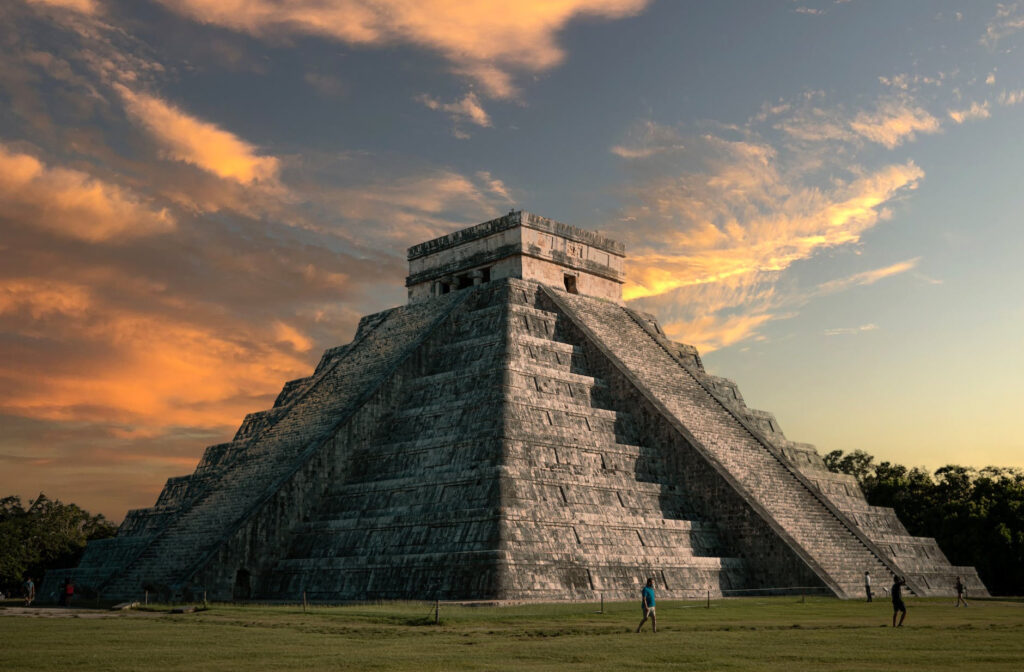
ziggaruts and arrows


“Come, let’s build ourselves a city and a tower with its top in the heavens so that we may make a name for ourselves…”

Genesis 11:4


We’ve long believed the people of Genesis 11 wanted to build a tower for themselves to scale the heavens, but that wasn’t it. The Tower of Babel was a ‘stage’ for their god to come down and visit them. Such towers, or ‘ziggurats,’ sat atop temples, providing their god(s) a ‘landing pad’ on which they could descend in grand style.

Trouble was, these were Mesopotamians; they certainly weren’t ‘YHWH’ people. The builders in the text longed for false gods with phony promises. In a similar story the prophets of Ba’al tried to upstage Elijah’s God by building theirs a runway. But guess who didn’t land? Although they wailed and hollered and chanted until they were blue in the face Ba’al never showed up (1 Kings 18:20-29).

Vanity of vanities, these worshipers of Marduk or Inanna or Anu, or whichever gods they could coerce to visit (‘build it and they will come’???), thought a skyscraper might get their attention. Alas, no.

Annnnnnd we keep building our towers. And they keep failing us. Careers, ideologies, reputations, portfolios, fantasies. Towers. Rubble. The Titanic was thought unsinkable. No less than a dozen utopian experiments have failed. Voltaire said within a hundred years of his death Bibles would be obsolete. One hundred years later, Bibles were being published in mass out of his home.

name above all names

A word about the phrase “make a name for ourselves” (Gen 11:4). In ancient thought it meant to create a ‘legacy.’ These ziggurat-builders wanted something lasting for their children and their children’s children. Nothing wrong with that, right?

Even us modern folk can justify our ambitions to be for the good of our children and our species. But in all our construction are we ignoring the Chief Cornerstone? Do our kids see us representing the Name above all names or is our handprint all they can see?

These Mesopotamians hoped to erect a Shining City on a Hill for their race. Trouble was, it was the WRONG CITY. There’s a reason we call it the Tower of Babel. Babel is about empire-building and man-exalting.

The gospel reverses all that. God wants to build a house, a CITY, a nation for US, for his people. We have nothing to offer him but ourselves in worship of his majesty.


Now I saw no temple in the city, because the Lord God—the All-Powerful —and the Lamb are its temple. The city does not need the sun or the moon to shine on it, because the glory of God lights it up, and its lamp is the Lamb. The nations will walk by its light and the kings of the earth will bring their grandeur into it. Its gates will never be closed during the day (and there will be no night there). They will bring the grandeur and the wealth of the nations into it, but nothing ritually unclean will ever enter into it, nor anyone who does what is detestable or practices falsehood, but only those whose names are written in the Lamb’s book of life.

Revelation 21:22-27

We live for the glory of the King. We are not here to build a legacy, much less “a name” for ourselves. Rich Mullins, the prophet-minstrel reckoned himself “an arrow pointing to heaven.” He said,

“If my life is motivated by ambition to leave a legacy, what I’ll probably leave as a legacy is ambition. But if my life is motivated by the power of the Spirit in me—if I live with the awareness of the indwelling Christ, if I allow his presence to guide my actions, to guide my motives, those sorts of things. . . . That’s the only time I think we really leave a great legacy.”

— Rich Mullins

That’s our legacy, too. We are ziggurats made of clay (2 Cor 4:7), “tent-temples” groaning for our release from this world that we might enter his.

Shinar people, to their great misfortune, set their aim for earth and got nothing out of the deal. No personal deity, no lasting city, no enduring legacy.

a ‘ziggurat’ named abram

In the very next chapter, lo and behold, there was a visit from Deity! The Supreme God found a landing pad in a nobody named Abram and said I want to make your name great for My glory. God had plans to give him a people, a City, a nation, and himself!

Now that’s a legacy!

Father Abraham looked out his tent one day and saw what God was up to. He witnessed in a billion points of shimmering light a family of arrows each pointing to and worshiping the Almighty.

Like him, let us live out our days “looking forward to that City with solid foundations of which God himself is both architect and builder” (Heb 11:10). Ziggurats of Zion. Arrows until eternity.

Selah, fellow arrows. Until the Day!

what started out as a barn

Do you not know that you are God’s temple and that God’s Spirit dwells in you?

1 Corinthians 3:16

Christmas is nearly upon us. We can be certain we will be treated to all forms of ‘baby Jesus in a stable’ scenes and meditations (mine included). While a barn may have housed the babe of Bethlehem, it will not do to accommodate a reigning King.

That’s you and me, friend. We are God’s house. For better or for worse, Jesus makes his abode in us.

The cave or lean-to in which Jesus was born gives a certain charm to the incarnation narrative but is quickly discarded for a house when the Magi show up.


Here’s a question: does our life say ‘barn’ or ‘temple’? Maybe we think we’ve got a dream house going on when really we’re just unstable structures built on sand.


Early on the tabernacle of God was a mobile tent. It sufficed for a time, but it really bothered David.

“Here I am inside a cathedral, while God is out there in a cardboard box!” he groused. David intended to do something about it, but God gently withstood him. We know the reason why, of course, but I think that story reveals something about how we approach life.

Put simply, we aren’t meant for this world. We are called to something more permanent, ever more glorious. Like David, we should be bothered. There should be in us a “holy restlessness” until God gets all that he rightly owns. Us. His temples.

In one gospel story, Peter and his boys had just watched a rich young ruler foolishly walk away from Christ, unwilling to liquidate his assets for the kingdom. What just happened, they wondered.

The disciples couldn’t believe what they were hearing, but Jesus kept on: “You can’t imagine how difficult. I’d say it’s easier for a camel to go through a needle’s eye than for the rich to get into God’s kingdom.”
That set the disciples back on their heels. “Then who has any chance at all?” they asked.

Mark 10:24-26, The Message

The disciples were dumbstruck. They’d been brainwashed to believe since birth that the rich and powerful were fast-tracked into God’s kingdom. Jesus upended that heresy by exposing the hypocrisy of the religious elite. That those (air-quote) other guys (end air-quote) wouldn’t gain entry they understood.

But this guy wasn’t a hypocrite. He wasn’t combative. He was sincere, respectful, even desperate. I mean, he actually ran up to Jesus and fell to his knees! If that’s not an altar call I don’t know what is.

Only he went away lost, owned by his wealth. Eugene Peterson helpfully writes, “His possessions were his millstone strangling the very life from his soul – that is why Jesus touched on the topic of what he owned. ‘It’s killing you man, it’s owning you!’”

The young aristocrat preferred his bigger barn portfolio to the Savior of the world.

Characteristically, Peter just had to inject himself into the uncomfortable silence.

See, we have left everything and followed you.

Mark 10:28, ESV

Except…

…much of what Peter and the others thought to be important was not really so, and that what they thought to be of no importance was often of great significance before God.”

Dallas Willard, The Divine Conspiracy, p. 121

If you’re out here just doing stuff to get reimbursed, rewarded, or recognized — even in the name of Jesus — forget it. That stuff’s just gonna get burned up.

Praise God, we know how the disciples’ story ends. Their faith in — and obedience to — Christ made their lives a fit habitation for King Jesus. They certainly did their share of slumming from time to time, but in the end they were temples.

One day we shall thank God we built with enduring material. It is so easy to let up here and there and work in a little wood or stubble, but blessed is the man (and woman) who will not substitute even the good for the best.

—Vance Havner

Jaroslav Pelikan, Yale scholar and historian of religion, observed:

Jesus of Nazareth has been the dominant figure in the history of western culture for almost twenty centuries. If it were possible, with some sort of super magnet, to pull up out of that history every scrap of metal bearing at least a trace of his name, how much would be left?

—Quoted from The Divine Conspiracy, Dallas Willard, p. 12

Setting aside the meta narrative of human history for a second, let’s address it on a more cellular level:

how much of ‘Jesus’ will be left in us when the fire purges from us everything that is not him?

That’s really the question. Are our respective ‘inns’ so crowded all we can offer Jesus is a mucked-out stable? Is he worthy of more?

As I’m writing this, I’m listening to the pounding of hammers on the other side of the house. For the past 251 days (yes I’m counting!) we’ve been temporarily lodging in a converted garage without a single window. All that pounding and sawing and drilling is sweet music to our ears; it means we will be moving into a spacious suite of rooms with plenty of windows through which the Florida sun can shine all the live long day!

You might say our living situation is a metaphor. I don’t want my life to be a garage without windows. I want to be a wide-open, well-lit, fully-accessible house for my Jesus.

Selah, beloved. Until next time.


[tipjarwp mode=”button” link_text=”Click here to buy me a coffee ☕️ Thank you!” open_style=”in_place”]